
In today’s busy business environments, there is an increasing desire among organizations in various industries to find an all-inclusive solution that helps streamline their operations, increase productivity, and create a competitive advantage in a fast-paced world. Enterprise Resource Planning (ERP) systems have been seen as the foundation tool in this era of business management, as they provide a unified systemthatch integratvariousin businesprocessesns within a single platform. The search to get the best ERP software has become more pertinent because companies have become aware of the revolutionary power of these advanced systems of business management.
In the modern dynamic market, finding a good ERP solution is a task that is in many ways well-nigh impossible. There are far too many, and each seems to hold some additional new expertise, basic level, or other factor that is theoretically superior to those of the others. Ranging all the way from moving from cloud-based platforms that provide scalability and ease of access, to on-premise solutions that give the user full control, businesses have a lot to sift through to find the picture-perfect match to their needs.
An ERP software solution that is well-suited to address the needs of a business differentiates itself by being flexible enough to fit a variety of business models, real-time analysis of business trends and trends in growth.
What is ERP Software?
Enterprise Resource Planning (ERP) software is a widely used business management software and is a collection and consolidation of all individual business processes and departments into one holistic software. It integrates all the central business activities of accounting, human resource management, inventory control, sales, procurement, and manufacturing via a centralized database.
The major role of ERP systems is to discard the data silos and create efficiency, and enable real-time observation in all parts of the business. Instead of having to integrate various disjointed programs to cover activities such as tracking inventory levels, monitoring financial performance, employee management, and information on customers, companies can rely on a single system to support these efforts.
The leading such ERP systems are as follows: SAP, Oracle, Microsoft Dynamics, and NetSuite. These systems generally offer customizable modules as per the specifications of the industry and scale of the company.
Essential Features to Look for in the Best ERP Software
Since ERP is a critical operation, the selection of the right product must be considered carefully based on the main features that support corporate goals and business activities. The most decent ERP software systems have the following aspects: they must deal with the core business and have some flexibility to expand and make necessary modifications in the future.
- Financial Management: In-depth accounting modules that manage general ledger functions, accounts payable and accounts receivable, budgeting, and financial reporting activities with real-time insight into the financial health and organizational performance measures.
- Inventory Management: Innovative inventory management features such as inventory tracking, auto re-ordering, warehouse movement, and supply chain management to maximise on low inventory costs, and yet maintain the availability of products.
- Customer Relationship Management: Unified CRM features that track the relationship between the customer and handle the sales pipeline, customer marketing campaign, and service management features to increase customer satisfaction and rate of retention rate.
- Manufacturing Operations: Manufacturing planning and scheduling software, quality systems, and shop floor management applications that offer optimal manufacturing and streamline operations.
- Business Intelligence: Highly advanced analytics and reporting analysis tools that turn raw data into usable information using customizable dashboards, predictive analysis, and real-time performance tracking.
Comparison Table for Best ERP Software
| ERP Software | Rating | Best Feature |
| Infor CloudSuite Industrial | 4.8/5 | Versatile manufacturing process support |
| Cetec ERP | 4.7/5 | Exceptional value at competitive pricing |
| NetSuite ERP | 4.6/5 | Comprehensive cloud-based scalability |
| SAP S/4HANA | 4.5/5 | Intelligent AI and machine learning integration |
| Acumatica Cloud ERP | 4.4/5 | Unlimited user consumption-based licensing |
| Epicor Kinetic | 4.3/5 | Manufacturing-specialized functionality |
| Sage X3 ERP | 4.2/5 | Multi-site and multi-legislation capabilities |
| Microsoft Dynamics 365 Business Central | 4.1/5 | Seamless Microsoft ecosystem integration |
| IFS Cloud | 4.0/5 | Modular architecture and enterprise asset management |
| DELMIAWorks (IQMS) | 3.9/5 | Integrated ERP and MES functionality |
Top 10 Best ERP Software
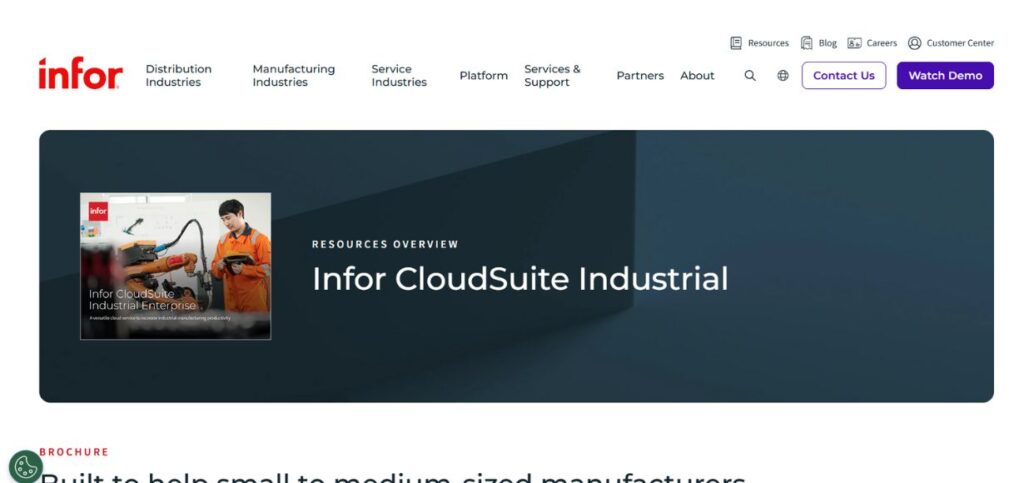
1. Infor CloudSuite Industrial
Rating: 4.8/5
Website: https://www.infor.com/products/cloud-strategy
Best Use Cases: Complex manufacturing environments requiring advanced production management capabilities
Infor CloudSuite Industrial is one of the most outstanding solutions used by manufacturers that require advanced operational flexibility and control. This is the most functional ERP software package that can accommodate a variety of manufacturing processes, such as make-to-order products, as well as highly complex mixed-mode operations. Its cloud-native structure makes the platform easily accessible, but it still makes room to accommodate delivery on-premises to meet peculiar organizational needs.
The user-centric attitude to the design of the system prioritizes role-specific dashboards and easy-to-use reporting tools, which make staff more productive and give them direct access to important operational data. It features detailed manufacturing management functions such as high-tech scheduling, real-time production control, and inventory planning applications, which make maintenance and operation of complex tasks easier.
Key Features:
- Advanced production scheduling
- Real-time monitoring capabilities
- Role-based dashboard interface
- Comprehensive inventory planning
- Social collaboration tools
Pros:
- Highly flexible deployment
- Intuitive user interface
- Comprehensive manufacturing support
Cons:
- Higher implementation costs
- Complex initial setup
- Extensive training requirements
Pricing: Starting at $200 per user per month
2. Cetec ERP
Rating: 4.7/5
Website: https://cetecerp.com/
Best Use Cases: Cost-conscious manufacturers requiring comprehensive functionality without premium pricing
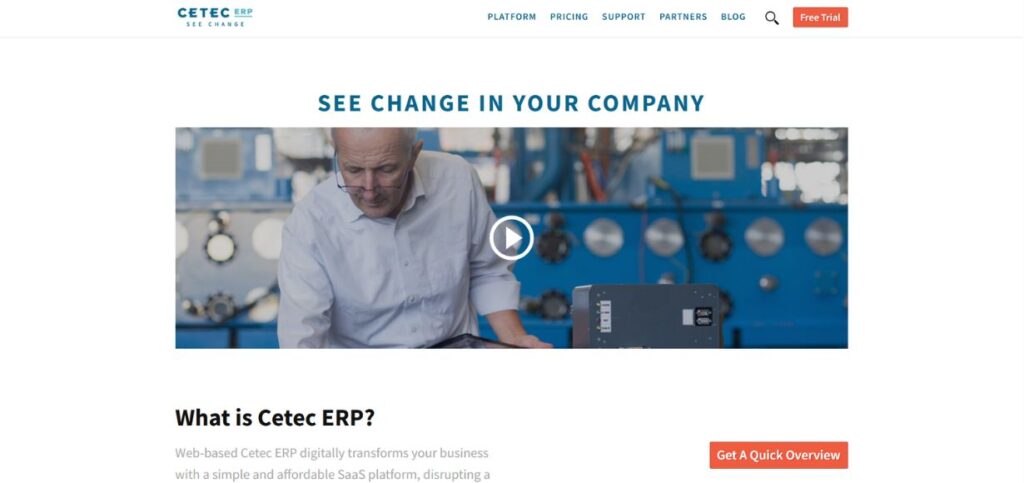
Cetec ERP is transforming the historical ERP business by offering enterprise-level functionality at incredibly low prices. This premier ERP software product delivers advanced cloud-based functionality to the industry at an affordable cost as compared to traditional enterprise environments offering the same.
The fully integrated platform combines quality management systems, manufacturing-specific functionalities, and powerful API functionality in a single ecosystem. Compared to the competitors that still charge extra fees in addition to their base pricing in case of additional modules, Cetec has provided all the customer relationship management services as well as the advanced accounting functionality as part of their base pricing.
Key Features:
- Integrated quality management
- Manufacturing-specific tools
- Comprehensive API access
- ISO compliance features
- Mobile warehousing capabilities
Pros:
- Exceptional value pricing
- All-inclusive feature set
- Strong regulatory compliance
Cons:
- Limited customization options
- Smaller user community
- Less established brand
Pricing: Starting at $50 per user per month
3. NetSuite ERP
Rating: 4.6/5
Website: https://www.netsuite.com/portal/home.shtml
Best Use Cases: Growing businesses requiring scalable cloud-based financial and operational management
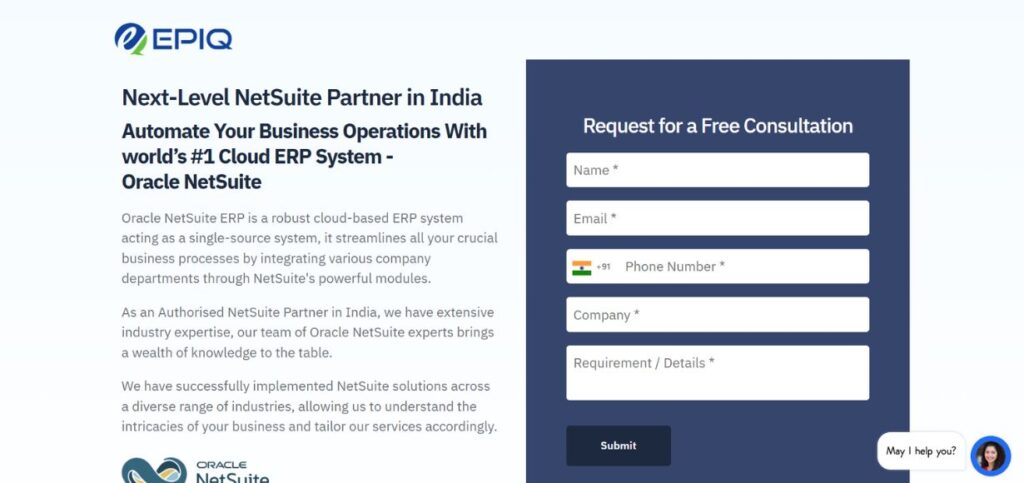
NetSuite ERP is one of the most successful cloud-based applications that can easily be employed in different organizations of various scales and complexity. This is the best ERP software platform, which offers robust financial management functionalities that simplify financial accounting, billing, and revenue collection functions, and the software also offers real-time overviews of the financial state of organizations.
The cloud-native design makes it equally accessible to any user and cuts down the infrastructural expense, along with avoiding needless intrigues in the hardware configuration process. Real-time reporting, advanced analytics, and built-in business intelligence capabilities can make fast and informed decisions that can support strategic business initiatives.
Key Features:
- Comprehensive financial management
- Built-in business intelligence
- Real-time reporting analytics
- Role-specific dashboards
- Extensive customization options
Pros:
- Excellent scalability features
- Cloud-based accessibility
- Comprehensive functionality
Cons:
- Higher per-user costs
- Complex customization process
- Steep learning curve
Pricing: Starting at $125 per user per month
4. SAP S/4HANA
Rating: 4.5/5
Website: https://www.sap.com/india/index.html
Best Use Cases: Large enterprises requiring intelligent technologies and advanced analytics capabilities
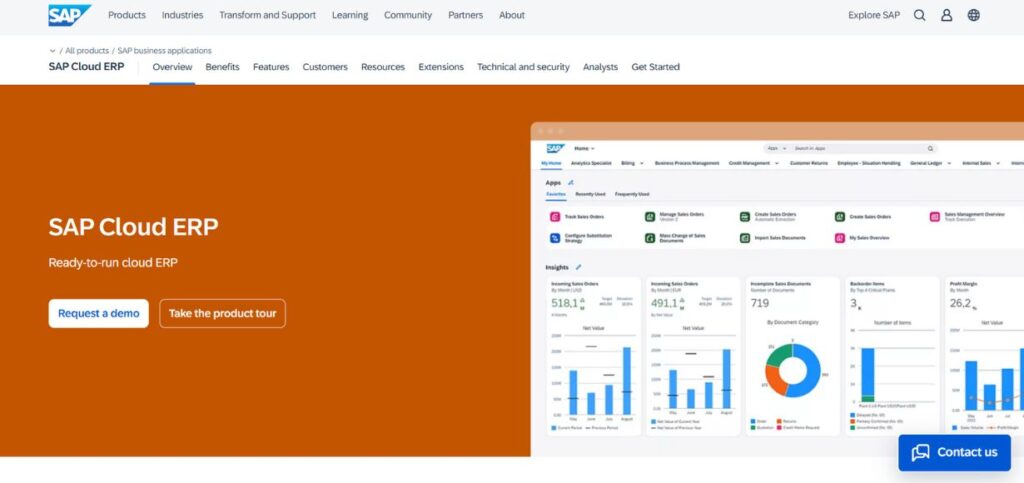
SAP S/4HANA integrates the latest intelligent technologies, artificial intelligence, machine learning, and advanced analytics to stay on the path of computing innovation. This is the top ERP software that enables organizations to maximize their technology investments as it supports advanced automation and forecasting.
Work center and resource capacity insights in real-time also allow manufacturers to balance loads effectively and make prompt changes in operations. This is because, with a live Material Requirements Planning (MRP) engine, immediate reactions are facilitated whenever there is a demand change or material change, as this is vital in ensuring smooth production activities.
Relationship with original equipment manufacturers and contract service providers provides collaboration that allows rapid fulfilment of custom orders, with minimum stock space and waste. The simplified business data architecture and unified in-memory data models reduce the complexity of running a hybrid landscape and make it more manageable and flexible at the same time.
Key Features:
- Smart computer helpers are built into the system
- Production planning that updates instantly
- Reports and charts you can see right now
- Team sharing and communication tools
- Fast data storage in computer memory
Pros:
- Uses the newest technology available
- Shows detailed business reports and insights
- Good customer service for large companies
Cons:
- Costs a lot of money to set up
- Hard to understand how everything works together
- Takes time to learn how to use it properly
Pricing: Starting at $200 per month
5. Acumatica Cloud ERP
Rating: 4.4/5
Website: https://www.acumatica.com/
Best Use Cases: Growing businesses seeking unlimited user access and modern technology integration
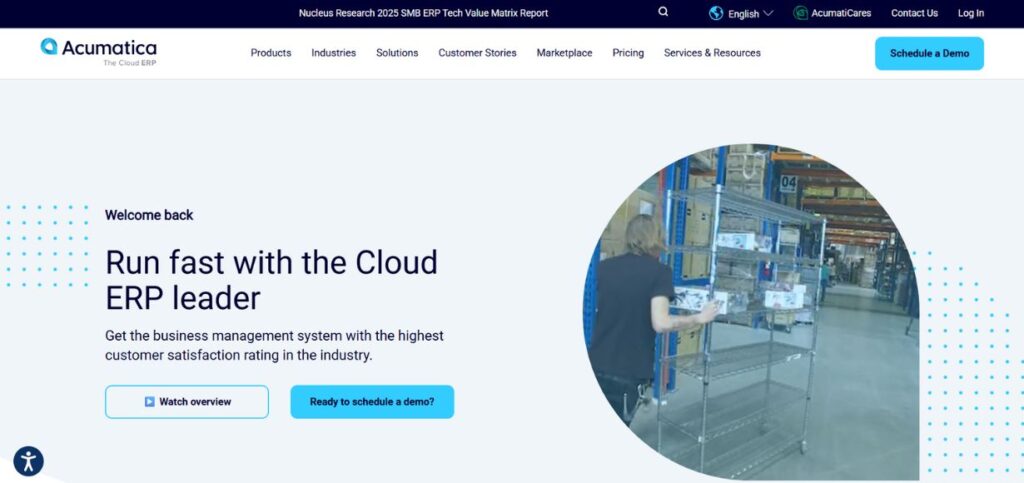
Uniquely, Acumatica Cloud ERP offers novel consumption-based licensing schemas that allow unlimited use without further expense, which allows collaboration across an organization and operational visibility. This is the best ERP software plan because it does not impose limitations similar to user-based ERP software systems and sustains scalability plans.
The strong integration features with future technologies such as artificial intelligence, machine learning, Internet of Things (IOT), and big data analytics place the businesses in a better position in the changing digital economy. The flexibility of the deployment of the platform works with cloud and on-premise preferences in order to address the varying organizational needs.
Key Features:
- Consumption-based licensing model
- Modern technology integration
- Flexible deployment options
- Intuitive user interface
- Real-time insight capabilities
Pros:
- Unlimited user access
- Excellent user interface
- Strong technology integration
Cons:
- Limited industry specialization
- Complex pricing structure
- Newer market presence
Pricing: Ranges from $7,500 to $150,000
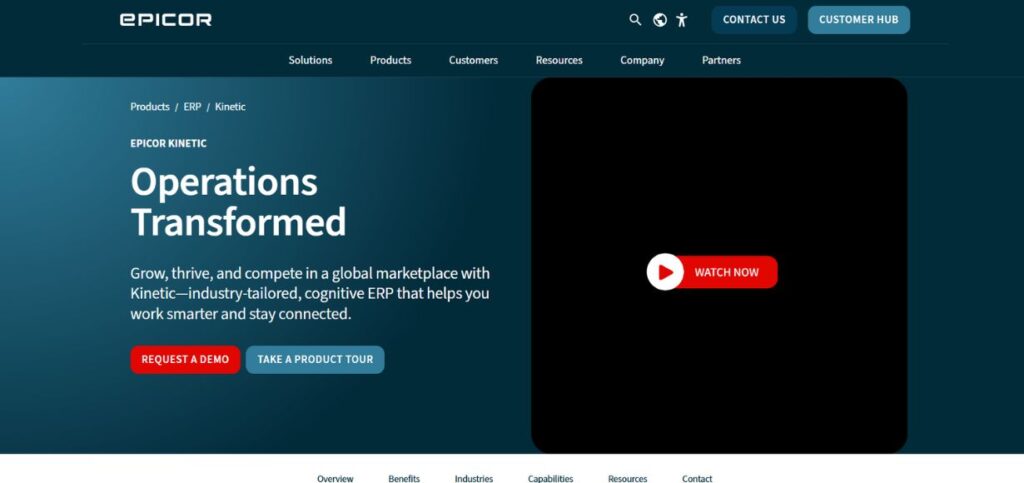
6. Epicor Kinetic
Rating: 4.3/5
Website: https://www.epicor.com/en/
Best Use Cases: Manufacturing businesses requiring specialized production management and quality control systems
Epicor Kinetic can be delivered with unrivaled flexibility with cloud deployment or on-premise options, supporting businesses with dissimilar deployment preferences and infrastructure needs. This is the best ERP software solution, it is specialized a complex manufacturing business operations and its production management capabilities are sophisticated.
It offers a user-friendly experience, oversimplification in navigation, and the home page is set according to roles that will enable even an occasional user to operate the system. Its powerful functionality facilitates a variety of manufacturing processes in the different environments of make-to-order, engineer-to-order, and mixed-mode manufacturing processes.
Supported by integrated features that include sophisticated planning, scheduling, in-process magnification, and product data management with detailed product capabilities to cover extensive manufacturing needs. The orientation to simplification and innovation used in the system is directly related to better productivity and efficiency, which is observed in manufacturing operations.
Key Features:
- Flexible deployment options
- Advanced planning scheduling
- Real-time production monitoring
- Extensive data management
- Role-based interfaces
Pros:
- Manufacturing specialization
- User-friendly interface
- Flexible deployment choices
Cons:
- Higher implementation costs
- Complex feature set
- Industry-specific focus
Pricing: Starting at $125 per month
7. Sage X3 ERP
Rating: 4.2/5
Website: https://www.sage.com/en-gb/
Best Use Cases: Mid-sized manufacturers requiring versatile production management and global operational support
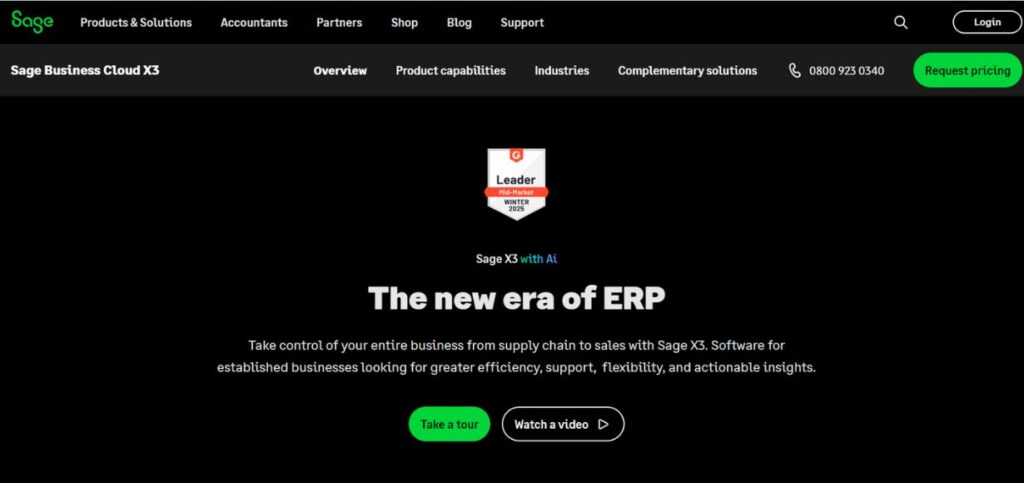
Sage X3 shows impressive adaptability to managing both discrete and process manufacturing environments, with the ability to support a full range of operational styles, make-to-order production, or mixed-mode manufacturing among them. SOA/Web-native platform of this best ERP software solution can offer true browser-agnostic access, as well as a strong mobile responsiveness without feature tradeoffs.
The built-in powerful business intelligence engine offers real-time analytical capabilities, and does not require any independent data warehouse implementations, streamlining business analytical workflows and reducing the complexity of their underlying architecture. Its comprehensive manufacturing control functions have a feature of finite capacity scheduling, real-time monitoring, and its advanced planning functionality that can adjust to different kinds of production approaches.
Key Features:
- SOA/Web-native platform architecture
- Integrated business intelligence
- Finite capacity scheduling
- RF warehousing capabilities
- Multi-legislation support
Pros:
- Versatile manufacturing support
- Strong mobile responsiveness
- Comprehensive control features
Cons:
- Higher implementation costs
- Complex system architecture
- Limited customization options
Pricing: Starting at $75 per month
8. Microsoft Dynamics 365 Business Central
Rating: 4.1/5
Website: https://www.microsoft.com/en-in/
Best Use Cases: Small to medium businesses leveraging the Microsoft ecosystem for integrated operations
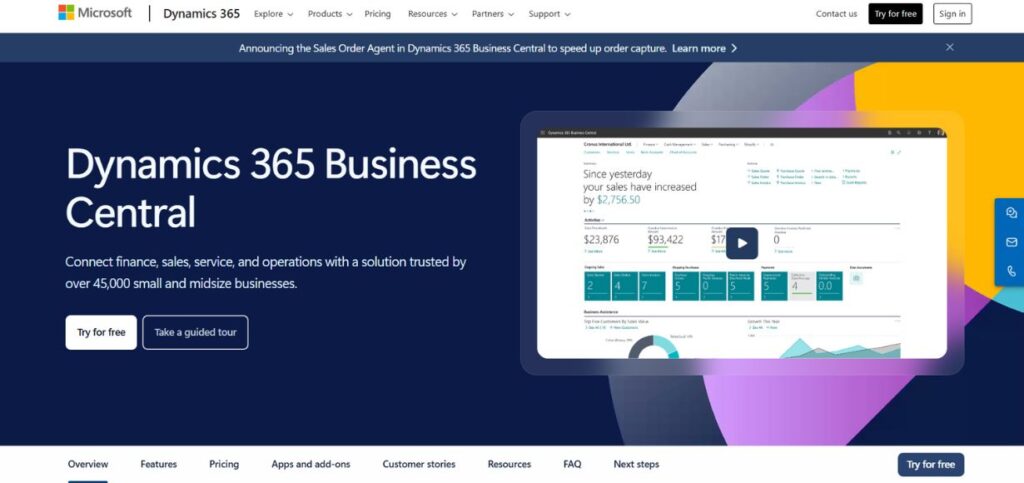
Microsoft Dynamics 365 Business Central is superior in that it is seamlessly integrated with other Microsoft business applications, such as Office 365, to render harmonious business environments to organizations already using Microsoft technologies. The product is the best ERP software due to its flexibility in deployment, such as cloud and on-premise implementations.
The system offers businesses a broad range of features that suit small to medium-sized manufacturing organizations to support their operations and optimize their profitability, such as a supply chain management component, project planning, job costing, and reporting functions. Existing solved problems, a user-friendly interface, and easy customization options are friendly to a wide range of business needs.
Built-in Microsoft Copilot AI brings advanced decision-making to the process with sophisticated analytics and automation features, making complex business process management much more efficient. Scalability of the platform enables the growth of the business, as well as ensuring that there is consistency in operation and that the users are familiar with the platform.
Key Features:
- Microsoft ecosystem integration
- Copilot AI features
- Project planning tools
- Job costing capabilities
- Flexible deployment options
Pros:
- Excellent Microsoft integration
- AI-enhanced capabilities
- User-friendly interface
Cons:
- Microsoft dependency
- Limited industry specialization
- Higher licensing costs
Pricing: Starting at $175 per month
9. IFS Cloud

Rating: 4.0/5
Website: https://www.ifs.com/ifs-cloud/platform
Best Use Cases: Complex industries requiring modular enterprise asset management and project management
FS Cloud is the most flexible, with the presence of all-inclusive toolsets capable of supporting industry sophistication. The modular design and service-oriented architecture of this best ERP software solution allow organizations to deploy only the required components, thereby reducing costs, operational complexity, and providing scalability.
The user interface, with its current design ethos of clean and clutter-free interfaces, will improve productivity by streamlining the process of navigation and task completion steps. The specialization of FS Cloud in its enterprise asset management, manufacturing, project, and supply chain management provides complete coverage of the business process.
Its vision of artificial intelligence integration into the ERP systems makes the platform one of the leaders in terms of technological innovation, as it introduces superior analytics and automation features that further assist decision-making and efficiency in operations. Speed and flexibility to respond to market changes, and yet not to interfere with the business operations, define it as a versatile ERP solution.
Key Features:
- Modular design architecture
- Enterprise asset management
- Modern user interface
- AI integration capabilities
- Service-oriented architecture
Pros:
- Flexible modular approach
- Strong asset management
- Modern interface design
Cons:
- Complex implementation process
- Higher user minimums
- Limited small business focus
Pricing: Custom pricing
10. DELMIAWorks (IQMS)
Rating: 3.9/5
Website: https://www.solidworks.com/
Best Use Cases: Process and discrete manufacturers seeking integrated ERP and MES functionality
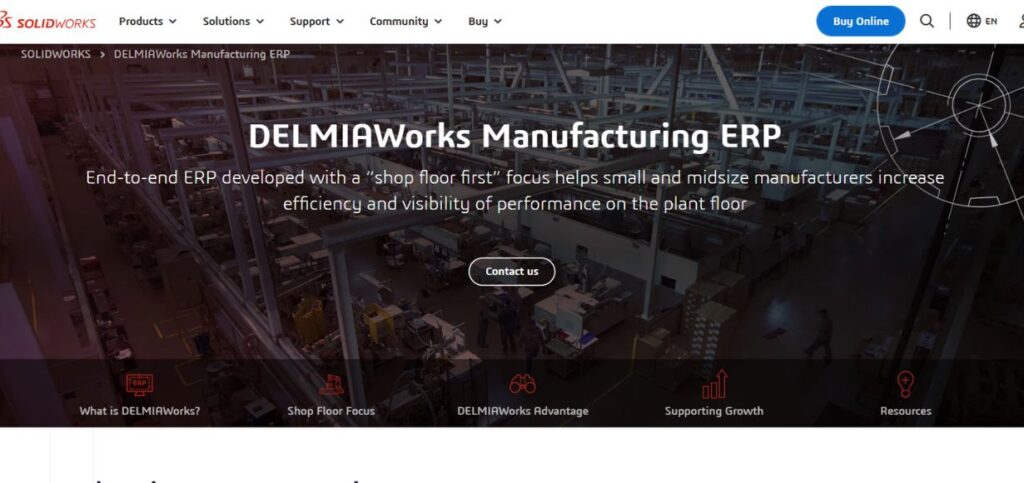
DELMIAWorks stands out by adopting a one-and-only vendor strategy that has done away with the involvement of expensive integration of different vendors. This best ERP software solution offers seamless integration of ERP and Manufacturing Execution System (MES) functionality, offering a holistic enterprise-level view of activities on the shop floor to the top of executive management. The Oracle-based database architecture provides enterprise-level performance and the benefit of security features without necessarily having to commit to Oracle-level licensing fees.
The proven ROI potential that the system offers in terms of lower inventory expenses, higher productivity, and streamlined operations makes it especially worthwhile to process and discrete manufacturers who experience measurable cost savings and operational optimization.
Key Features:
- ERP/MES integration
- Real-time manufacturing capabilities
- Oracle-powered database
- Single-vendor approach
- Enterprise-wide visibility
Pros:
- Integrated ERP/MES functionality
- Strong manufacturing focus
- Measurable ROI potential
Cons:
- Limited market presence
- Complex implementation
- Higher learning curve
Pricing: Custom pricing
How to Choose the Best ERP Software
Enterprise resource planning solution selection should be a well-planned process with a consideration of several parameters that meet the organizational goals, the functional needs of an organization, and its growth strategies. The ideal ERP software selection is achieved after thorough assessment of the business requirements, technological demands, and the strategic objectives of the organization in the future.
- Industry Specialization: Examine the ERP solution to understand whether it has industry-specific features that cater to the industry-related requirements, industry-related regulations, and industry-related business processes that a generic solution may not be very good at.
- Scalability Needs: The requirements of the platform as your organization grows, i.e., expansion in user loads, features, and locales, without the need for replacement or extensive redesign.
- Integration capabilities: assess the capabilities of the ERP system to integrate well with existing business applications, third-party applications, and new technologies with the aim of ensuring operational efficiency and achieving cost-effective returns to any investment in the ERP system.
- Deployment Preferences: How closely will deploying cloud-based, on-premise, or hybrid deployment models best serve your organization, about the preferences of security, controls, and existing capabilities of the infrastructure?
- The Total Cost Ownership: Estimate total costs of licensing, implementation, training, maintenance, and ongoing support to achieve a sustainable value with the solution within your budget limits and financial forecast.
Conclusion
The field of best ERP software has become highly dynamic and is growing fast as a result of changes in technology and business demands. Firms that aspire to gain competitive advantages should also consider the available options carefully in identifying the platforms that would not only cover their current needs but also the future growth and innovation pursuits of the organizations.
Today, modern ERP solutions carry forward their modern capabilities beyond the traditional scope by becoming strategic enablers that feature advanced technologies such as artificial intelligence, machine learning, and cloud computing to offer expanded business management features. The successful ERP software tools stand out due to the flexibility in their adaptation to different business services, compatibility with different business models, and the scalable features that accommodate the growth of organizations.
To ensure the success of the selection and implementation of ERP, a proper knowledge of organizational requirements, proper evaluation of vendor capabilities, realistic evaluation of implementation resources, and timelines should be obtained. Investment in the best ERP software is a long-term strategic move that will resonate on the operational efficiency, competitive advantage, as well as sustainable business value.
Frequently Asked Questions
Q: Why is ERP software the best option in my business?
A: The best ERP software fits your unique industry needs, it scales with your growth initiatives, integrates beautifully with current applications, and most importantly, it returns the value that you invest into it in terms of improved efficiency and reduction of operational cost.
Q: What can I spend on ERP implementation?
A: ERP implementation costs depend largely on the complexity of the system, the number of users, and customization demands, and can cost as little as 10,000 dollars for small systems or over a million dollars to implement, including licensing, configuration, training, and support.
Q: What are the differences between cloud-based and andon-premisese ERP systems?
A: Cloud-based ERP systems have a lower initial cost, automatically update, and can be accessed remotely, whilst on-premise solutions have more control, customization, and can be more secure, especially when organizations have certain regulatory requirements.
Q: What is the typical timeframe to implement and go live on an ERP implementation?
A: For smaller systems, ERP implementation can take as little as 3-6 months, whereas larger operations involving enterprise-level systems might take 12-24 months.
Q: Am I able to transition between one ERP system and another in case my existing system is not doing what it should?
A: ERP migration is though possible, such a step would involve a lot of planning, resources, and time. Correct initial choice with adequate evaluation procedures will reduce the necessity of further change in the system and related expenditures.