Working remotely in marketing can be a great way to generate an income while seeing all corners of the world. But while traveling can be invigorating, it also can complicate your tax situation. After all, it’s not always obvious if you need to pay U.S. taxes when you’re working abroad. You don’t want to risk getting in legal trouble by avoiding the issue, however.
Fortunately, you’ve come to the right place if you’re hoping to find clarity on U.S. tax obligations. We’ll unpack the rules and tax jargon that can be confusing. And we’ll help you become aware of both common stumbling blocks and benefits that can help you keep more of what you earn. Keep reading to learn more about how remote marketers should handle taxes while overseas!
Why You Owe U.S. Taxes When Working Abroad
Do you need to pay taxes when living and working in a different country? Yes, you do. If you’re a U.S. citizen or have a green card, you’re liable for taxes, regardless of where you’re working. Maybe you spend six months in Spain or live full-time in Italy. You’ll still owe taxes, even when you spend the bulk of your time abroad. That’s because the U.S. looks at citizenship as an indication of tax obligations.
Tax residency in the U.S. can be established by your citizenship or possession of a green card. That won’t change, even if you’re working somewhere else. But you may be able to secure some tax breaks depending on your physical presence. In other words, if you’re spending 90% of your time in another country, that could help trim the amount of taxes you pay. For a deeper dive into why US expats should file taxes, check out this link.
Limit Your U.S. Tax Obligations with FEIE and FTC
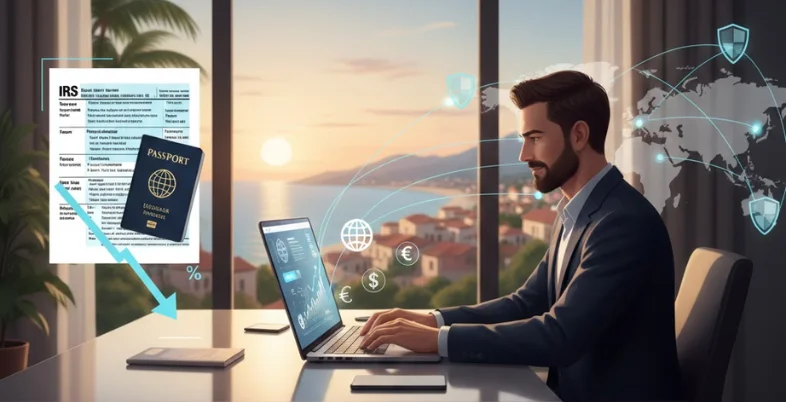
It may feel frustrating to learn that you need to pay taxes to support services in a country you rarely see. If you’re spending more time traveling than on U.S. soil, you can use some tools to help reduce your tax payments. The Foreign Earned Income Exclusion (FEIE), for instance, allows you to remove some of your income earned in different countries from your taxable income in the U.S. This amount can shift each year according to inflation rates, and you’ll need to make an FEIE election when filing your returns. In other words, don’t skip filing your returns or assume that an FEIE election is automatic.
FEIE isn’t available to just any remote marketers, however, and there are some rules. You need to spend at least 330 days living and working outside the U.S. in a calendar year. Or you must have property in a foreign country that you treat as your primary home. Taking too many trips back to the U.S. in a year could disqualify you. And be aware that FEIE only applies to earned income, like payments from clients. You can’t use it for forms of passive income, such as money earned through investments.
The prospect of paying taxes to multiple countries can be off-putting when you’re a remote marketer trying to grow your business. Thankfully, the U.S. government offers a Foreign Tax Credit, so you’re not taxed multiple times. You can turn to the FTC if you’re living in a country that has higher income taxes or rates higher than those in the U.S. You can use both the FTC and FEIE in a given year, but they can’t be applied to the same source of income.
Watching for Common Mistakes
Yes, federal taxes are the focal point during tax season. But state taxes can come into play when you’re living abroad, too. If you’ve had residency in California or New York, for instance, you could still be considered a resident, even when you’re working in a different country. Maybe you pop back home for occasional visits, but primarily call France your home. If you still have a California driver’s license and use local banks there, you’re considered a resident. As a result, you’ll need to pay state income taxes. This is true even if you spend most of your time outside of the state.
Not every state will have strict standards about income taxes, however. In fact, some states don’t even have income taxes. You may be better off moving to Florida or Texas, for instance, and establishing residence there before taking your work efforts abroad. Then you won’t need to worry about state taxes.
Saving Records to Verify Your Situation
It would be nice to think you can just tell the IRS that you’re primarily living abroad and that would be enough to validate your tax return. But you’ll need to have evidence, too, which can be especially helpful if you’re audited. Plan on maintaining a file of documents that can prove where you live and work.
Keep records that show your travel habits. Anything from hotel receipts to flight bookings can help paint a picture of where you’re spending your time. Likewise, passport stamps and receipts from other experiences, like visits to restaurants, can be helpful. If you’re leasing an apartment or house, keep copies of payments or lease agreements. And save utility bills and local registration documents.
You’ll want a file demonstrating your income streams, as well. Collect invoices from recent jobs and pay stubs. Have bank account statements that can show deposits for job-related payments. Since you’ll need to show that you’ve earned money while working abroad to access FEIE, these documents become even more important. And don’t forget to save copies of tax returns from foreign countries or any tax assessments, as these could help with validation for the Foreign Tax Credit.
Tracking Your Location with Apps

How do you verify where you were when you were working? It’s not always easy to do, particularly if you’re hopping from one country to the next frequently. Thankfully, automated tools, like apps, can do this work for you. Your phone’s GPS can indicate your location, and an app on your phone can track where you were each day, for example. This can be a helpful way to gather a detailed record of your locations and assign income to those locations. Keep income earned while in the U.S. separately categorized from income earned in other countries.
Store your documents and data securely on the cloud. You’ll want to access documents like bank records or flight receipts from any location. And hang onto any records connected to your taxes for at least three years. You’ll be happy to have them if there are any questions about your tax return.
Staying Aware of U.S. Tax Rules
Ultimately, you can’t entirely avoid paying U.S. taxes as a remote marketer working abroad. But you can find ways to reduce your tax burden. Just be sure that you’re aware of your federal and state responsibilities, too. You can use FTC and FEIE to help limit what you pay the U.S. And you’ll want to have ample documentation to verify your locations where you earned money. Use an app to stay organized and automate location tracking. When you’re diligent about your tax obligations, you’ll avoid tax problems down the road so you can focus on enjoying your travels.