Healthcare providers are increasingly operating under pressure to streamline their financial functions and maintain quality health care to patients. Medical billing/insurance claims processing/payment collection has become extremely complex and time-consuming, and therefore, not feasible to be done manually. It is here that revenue cycle management software is the most necessary element of contemporary healthcare organizations.
One of the key features of these advanced platforms is that they simplify the entire financial process, including patient registration and completing the process through to final payment generation, eliminating time-consuming administrative chores without introducing expensive mistakes. Healthcare practices can boost their cash flow, minimize claim denials, and speed up their payment collection process by using a powerful revenue cycle management software.
The possibility of finding various solutions in the market is not an exception, as every solution has been created to solve particular problems of the revenue cycle. Whether it is a small independent practice or a large hospital system, there is an AEvenue cycle management software available to fit a variety of organizational needs. The systems can be easily integrated into an existing electronic health records and practice management framework to become part of an all-inclusive practice system.
What is Revenue Cycle Management Software?
Revenue cycle management software is a complex technical intervention that is able to streamline and automate the financial part of the healthcare delivery process. These platforms support the patient journey process by scheduling bookings all the way to the payment collection stage, allowing for seamless financial processes.
The software handles critical operations, including patient registration, insurance verification, claim submissions, payments, and accounts receivable. Revenue cycle management software adds value to these workflows by eliminating manual steps and human-generated inefficiency through automation of most of its processes. These systems also give live transparency of the financial performance indicators, which can be used to make data-driven decisions that can enhance revenue optimization.
Essential Features to Look for in Revenue Cycle Management Software
When it decides on potential solutions, healthcare organizations would do well to take note of features that would meet their business needs and development strategies. The most effective revenue cycle management software is more than automation, delivering powerful analytics that can be leveraged into substantial improvement in financial performance.
- Claims Management: Claims can be made automatically with the real-time tracking capabilities, and this makes it much faster and significantly decreases the chances of claims being rejected.
- Patient Portal Integration: Patients are accustomed to the convenient and understandable digital way of making payments and receiving bills.
- Analytics and Reporting: Insightful dashboards provide actionable information on important performance indicators, collection rates, denial trends, and revenue patterns.
- Regulatory Compliance: Compliance functionality is built in to assist with meeting HIPAA, ICD-10, and other regulatory requirements and can be adjusted easily to meet changes. This prevents the risk of non-compliance and penalty.
- Integration: That is why fluid integration with existing EHR systems and practice management solutions eliminates data silos and facilitates a healthy information flow across all healthcare processes to improve efficiency and accuracy.
Read more: Best Chatbots for Shopify
Comparison Table for Revenue Cycle Management Software
| Software Name | Rating | Best Feature |
| Allscripts PayerPath | 4.0/5 | Electronic Claims Processing |
| CareCloud Concierge | 4.4/5 | Integrated Practice Management |
| Waystar | 4.8/5 | Advanced Analytics Dashboard |
| eClinicalWorks RCM | 4.2/5 | EHR Integration |
| athenaIDX | 4.3/5 | Patient Engagement Tools |
| AdvancedMD | 4.3/5 | End-to-End Solutions |
| TruBridge | 4.1/5 | Data-Driven Insights |
| Tebra | 4.0/5 | Cloud-Based Automation |
| Conifer Revenue Management | 4.5/5 | Enterprise Scalability |
| OpenPM | 4.0/5 | Cost-Effective Solutions |
Top 10 Revenue Cycle Management Software
1. Allscripts PayerPath
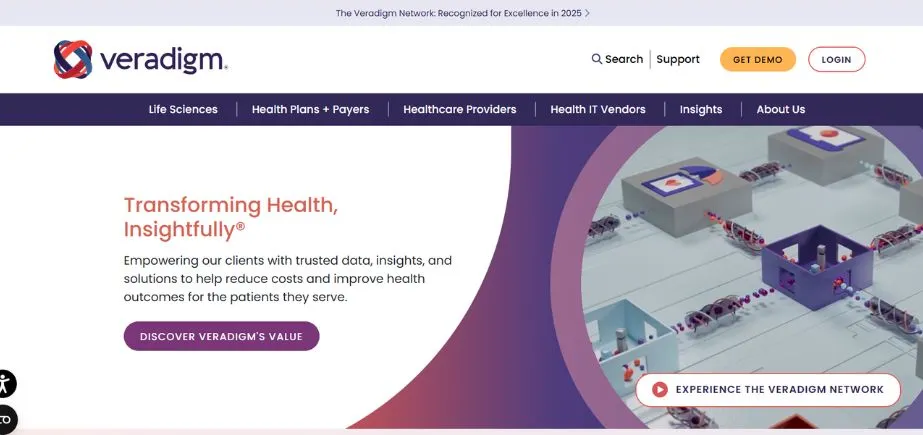
Rating: 4.0/5
Website: https://veradigm.com/?modal=allscripts
Best Use Cases: Large healthcare networks requiring robust claims management
Allscripts PayerPath is focused and specialized to provide robust claims management solutions that are highly designed and specific to complex healthcare settings. The platform specializes in real-time claims submission processes that witness a significant increase in the speed of the revenue cycles as well as the health of the cash collection sides of healthcare providership. It is also especially valuable to organizations that need corporate-level revenue cycle management software.
The strength of the system is associated with its capability to process a high volume of claims with a high level of accuracy. Before claiming, the advanced algorithms of PayerPath analyze the claims and detect problems that might be raised to cause rejection or delay of the claim. Such an aggressive stance can assist healthcare organizations with consistent revenue and reduce the administrative humiliation in the form of claim rework and resubmission.
Key Features:
- Electronic claims processing
- Regulatory compliance monitoring
- Denial management automation
- Real-time submission tracking
- Multi-payer connectivity
Pros:
- High acceptance rates
- Strong compliance support
- Reliable denial management
Cons:
- Complex user interface
- Limited customization options
- Higher cost point
Pricing: Custom pricing
2. CareCloud Concierge
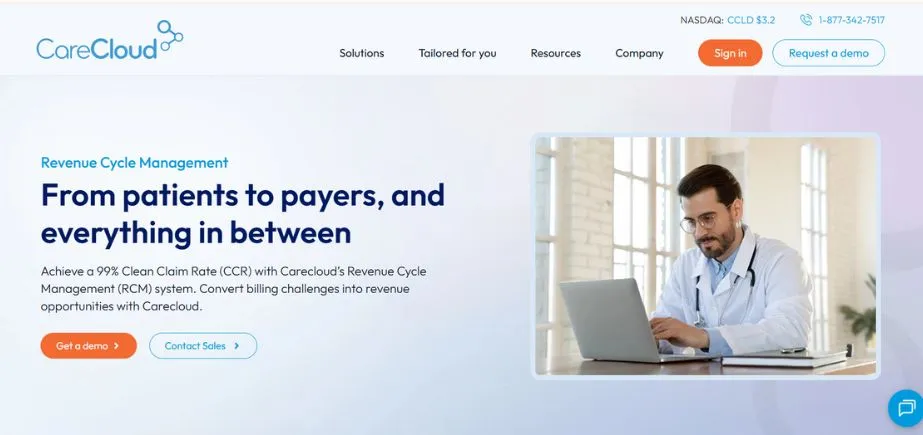
Rating: 4.4/5
Website: https://carecloud.com/rcm/
Best Use Cases: Medium practices seeking integrated practice management solutions
CareCloud Concierge provides a multi-faceted practice management integration that integrates scheduling, billing, and patient communication tasks into one system. The solution highlights increased patient participation with the help of the advanced communication tools to facilitate automatic reminders and notifications. The defining feature of this revenue cycle management software is that it automates more than one operational facet at a time.
The analytics dashboard on the platform offers comprehensive information in terms of financial performance metrics and helps healthcare providers make informed decisions when it comes to their revenue optimization strategy. The concept of patient experience improvement does the same and allows organizations to strengthen their relationships, thus ensuring efficiency in terms of financial operations. The system has the support of a responsive customer service desk, and the users are supported at the right time of need.
Key Features:
- Integrated practice management
- Patient communication tools
- Financial analytics dashboard
- Automated appointment reminders
- Online payment processing
Pros:
- Strong practice integration
- Excellent patient engagement
- Responsive customer service
Cons:
- Automatic update disruptions
- Cost factors considerations
- Periodic accessibility issues
Pricing: Percentage-based model typically ranging from 3-7% of monthly collections.
3. Waystar

Rating: 4.8/5
Website: https://www.waystar.com/
Best Use Cases: Healthcare organizations requiring advanced analytics and automation capabilities
Waystar is one of the most comprehensive solutions to revenue cycle management, introducing its cloud-based analytics, automating administrative activities, and minimizing the costs of operations. The advanced automation support of the platform automates the work on claims management and eligibility checks, to provide much greater efficiency to healthcare organizations of any size.
The data analytics capabilities of the system offer new levels of insight with in-depth financial analytics that assist organizations in determining revenue optimization opportunities. The ease of use of Waystar can facilitate access to the system by staff members of different levels of technical knowledge. There are more than 100 connections available to the platform through which it is capable of connecting to various healthcare systems to ensure integration and operational uniformity across all platforms.
Key Features:
- Advanced automation tools
- Comprehensive data analytics
- User-friendly interface design
- Claims management optimization
- Eligibility verification automation
Pros:
- Robust analytic capabilities
- Wide integration range
- Effective cost management
Cons:
- High pricing structure
- Limited customization options
- Learning curve requirements
Pricing: Custom pricing
4. eClinicalWorks RCM
Rating: 4.2/5
Website: https://www.eclinicalworks.com/
Best Use Cases: Practices prioritizing EHR integration and patient portal functionality
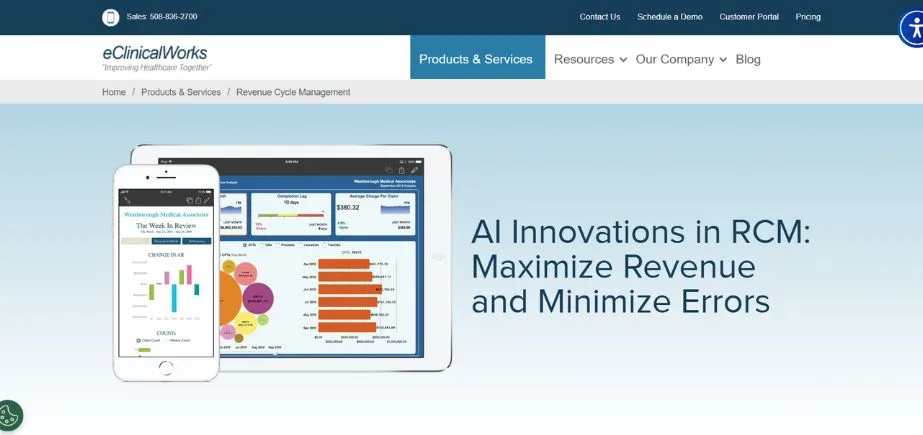
ClinicalWorks is a complete RCM software that focuses on the speed and accuracy of billing with the help of cutting-edge cloud-based software solutions. An advantage to this platform is that its electronic health integration features are seamless and, therefore, easily integrate with existing EHR systems, and, as such, would be an ideal review cycle management software to adopt during upgrades in any organization whose current technology infrastructure is already established.
The system is strong in patient engagement because it includes detailed tools such as a patient portal with robust online payments and contact. Real-time reporting functionality lets you report on the RCM performance metrics when needed and allows organizations to track their financial activities in real-time. The interest of the platform in optimizing the efficiency of patient payment collection assists organizations in sustaining cash flow cycles.
Key Features:
- Electronic health integration
- Patient portal functionality
- Real-time reporting dashboard
- Online payment processing
- Performance metrics tracking
Pros:
- Strong portal features
- Efficient billing cycles
- Comprehensive reporting tools
Cons:
- Time-consuming initial setup
- Occasional system lag
- Costly for smaller practices
Pricing: plan starts at $449 per month
5. athenaIDX

Rating: 4.3/5
Website: https://www.athenahealth.com/
Best Use Cases: Organizations focusing on patient communication and claim approval optimization
AthenaIDX offers an effective revenue cycle management system that meets revenue cycle challenges through improved billing and patient communication technologies. Developed with the sole aim of streamlining revenue operations, the system allows streamlining revenue operations and ultimately enhancing practice efficiency through the best intelligent automation and workflow optimization features.
The patient-engagement tools provided by the platform have extensive functionality, including automated reminders and patient portals that improve communication and payment collections. athenaIDX ensures a high claim approval rate as it minimizes rejections and waiting time due to the efficiency of claim processing. The system also ensures that it will have strict regulatory compliance, where the regulations governing the healthcare industry will be followed.
Key Features:
- Patient engagement tools
- Efficient claim processing
- Regulatory compliance monitoring
- Automated reminder systems
- Portal-based communication
Pros:
- Superior patient communication
- High claim approval rates
- Effective compliance adherence
Cons:
- Costly for smaller practices
- Steeper learning curve
- Fewer customization options
Pricing: Custom pricing
6. AdvancedMD
Rating: 4.3/5
Website: https://www.advancedmd.com/revenue-cycle-management/
Best Use Cases: Healthcare providers seeking comprehensive end-to-end billing solutions
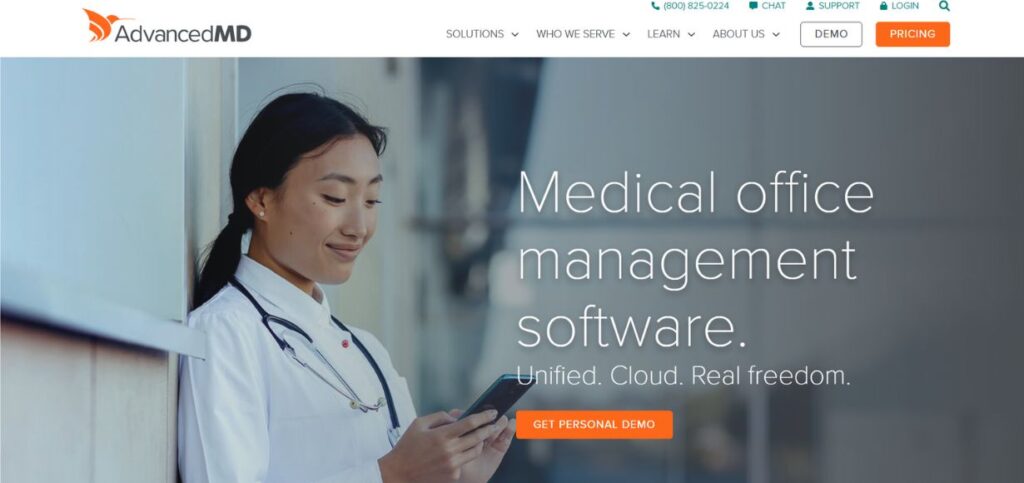
AdvancedMD provides a solution to their the whole revenue cycle management, which includes both billing automation and powerful services, and transparent financial reporting. The site is flexible with practices opting to use in-house billing software or fully to outsource revenue cycle management services, which is applicable to practices regardless of their level of development.
The system has a good claims scrubbing technology that greatly minimizes the denials of claims and speedy reimbursement duration. The reporting and analytics dashboard of AdvancedMD gives a real-time financial performance visibility and allows customizable reporting to help practices discover new revenue opportunities and monitor key performance indicators. The competitive pricing model of the platform that is based on a percentage of practices is also a low-cost solution to maximizing revenue, as it allows practices to pay based on the revenue they receive.
Key Features:
- End-to-end revenue solutions
- Billing task automation
- Compliance and security
- Patient registration management
- Collections optimization
Pros:
- Strong automation components
- Comprehensive billing services
- Efficient user support
Cons:
- Initial setup complexity
- Limited feature customization
- Greater focus on larger practices
Pricing: Custom pricing
Also read: Best ERP Software Solutions
7. TruBridge
Rating: 4.1/5
Website: https://trubridge.com/
Best Use Cases: Healthcare providers requiring data-driven insights and revenue optimization
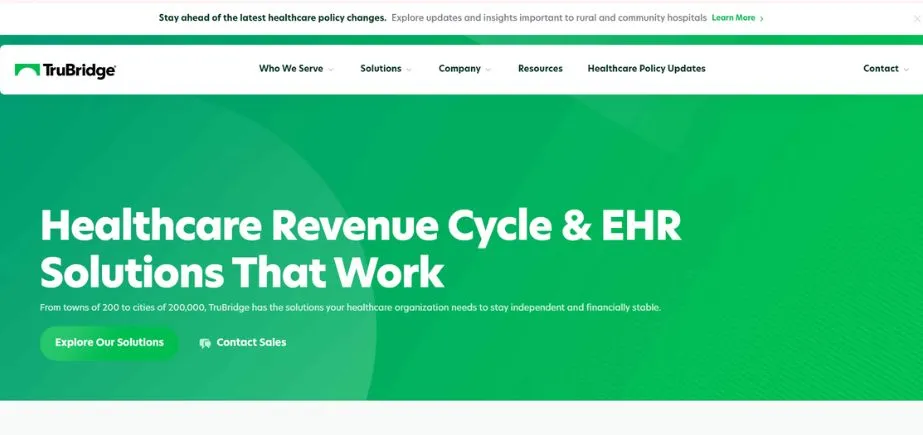
TruBridge provides end-to-end RCM software that helps a healthcare provider achieve operational efficiency and cost-effectiveness through a data analytics-driven revenue cycle to boost profitability. The platform capitalizes on its data-driven insights, which employ advanced analytics to guide strategic decision-making practices on every front within revenue cycle management software activities.
The revenue optimization solutions that the system offers revolve around maximizing accounts receivable with smart workflow optimisations, which streamline healthcare management processes. The high-quality analysis tools of TruBridge are able to make customized workflow improvements based on tailored needs, as well as performance patterns of the individual organization. The platform is compatible with many clinical and administrative platforms, having an improved overall workflow and data management ability.
Key Features:
- Data-driven insights analytics
- Revenue optimization strategies
- Workflow efficiency tools
- Account receivables management
- Clinical platform integration
Pros:
- High-quality analytical tools
- Effective optimization strategies
- Customized workflow improvement
Cons:
- Limited feature customization
- Complexity for beginners
- High full-service costs
Pricing: Custom pricing
8. Tebra
Rating: 4.0/5
Website: https://www.tebra.com/
Best Use Cases: Healthcare entities requiring cloud-based automation and data management
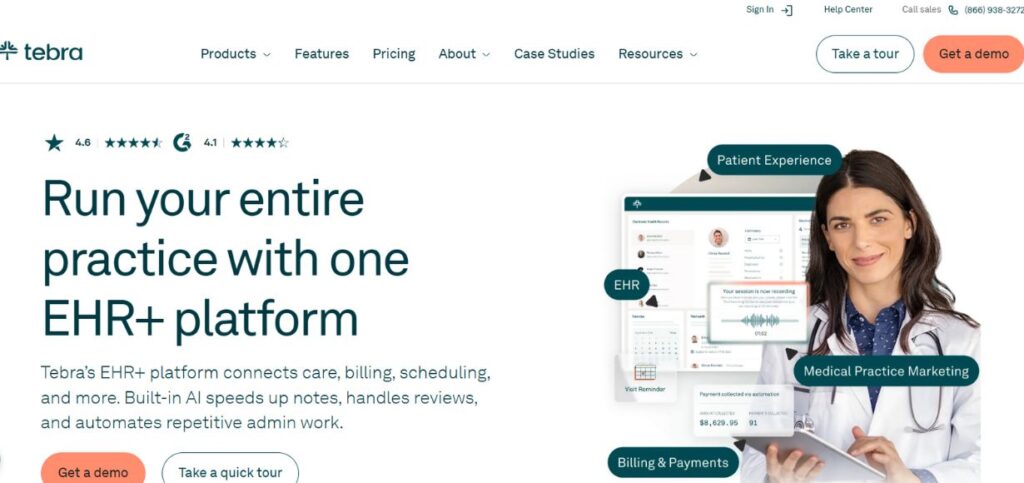
Introduced as Kareo in 2011 and now called Tebra, is an all-in-one EHR+ offering, a curriculum developed to meet specific needs of independent healthcare practices, encompassing revenue cycle management, clinical documentation, patient engagement, and marketing of the practice.
The feature that is most remarkable about the platform is its AI Note Assist technology that saves clinical documentation up to 50% due to the ambient documentation features.
The system has built-in robotic process automation (RPA) that simplifies the billing processes and minimizes manual activity across the revenue cycle. Some of the features of Tebra patient engagement suite are patient-to-patient scheduling, automatic reminders, and clear billing, which enhance collections and patient satisfaction.
Tebra is also developing automated coding of claims and predictive denial controls with recent investments in the field of AI technology to enable practices to maximize income and reduce administrative overhead.
Key Features:
- Automation technologies suite
- Real-time data management
- Cloud-based accessibility
- Scalable integration options
- Performance analytics dashboard
Pros:
- Excellent automation capabilities
- Informative data management
- Scalable cloud solutions
Cons:
- Internet connectivity requirements
- Potential security concerns
- Technical difficulties reports
Pricing: Custom pricing
9. Conifer Revenue Management
Rating: 4.5/5
Website: https://coniferhealth.com/
Best Use Cases: Large practices and hospital systems requiring scalable operations
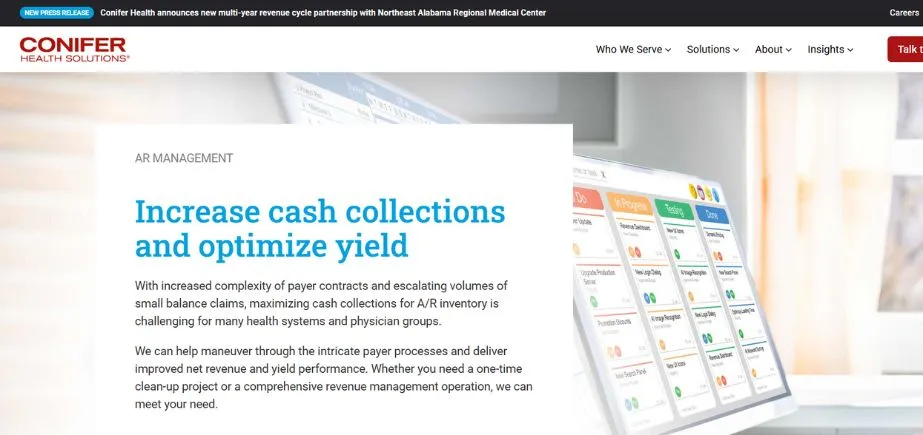
Conifer Revenue Management offers scalable revenue management solutions to eliminate cash flow and burden healthcare organizations with operational efficiencies. It performs especially well in sorting out complex billing workflows, so it can be a good solution for larger practices and hospital systems that need a mature revenue cycle management software solution that can scale to their needs.
The system can handle large billing operations without complications, and it also has the option of scaling down or scaling up the flexibility to rise to the needs of the growing practice. The impact brought about by ensuring revenue integrity and accuracy in the financial transactions has led to Conifer enjoying a good reputation in boosting revenue. The system is compatible with the leading electronic health records systems, which helps to transition into the digital financial management processes with ease.
Key Features:
- Extensive billing management
- Scalability optimization
- Revenue integrity assurance
- Complex workflow handling
- EHR system integration
Pros:
- Large-scale operation management
- Strong revenue increase reputation
- Flexible scalability options
Cons:
- Complexity is unsuitable for small practices
- Higher operational costs
- Limited feature personalization
Pricing: Custom pricing
10. OpenPM
Rating: 4.0/5
Website: https://openpractice.net/
Best Use Cases: Small to medium-sized practices prioritizing affordability and simplicity
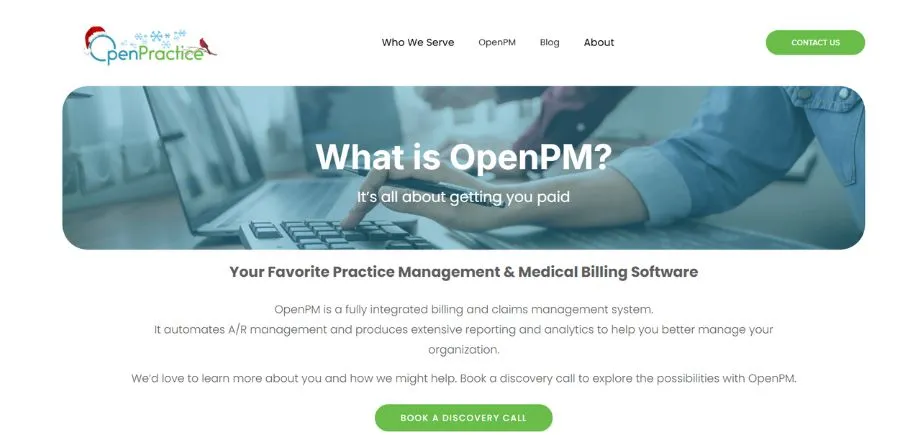
Small to medium-sized healthcare practices with less than 5000 patients. Our revenue cycle management software solutions provide a cost-effective alternative to large healthcare practices and are designed to address the needs of these facilities. The platform is cost-effective and easy to operate, and it has the capacity to execute the essential functionalities required to ensure that revenue management operations continue to be carried out efficiently. This approach will provide access to an increased level of RCM capabilities to smaller organizations that may have less funding to invest in IT.
The uncomplicated interface of the system is easy to use for all users, regardless of their technical orientations, including wide reporting that gives the necessary financial reports important in decision-making.
The pricing policy of OpenPM is rather affordable, and the intuitive interface of the tool is sure to make this software one that will be popular in practices that need the revenue cycle management to be genuinely effective without spending large amounts of money.
Key Features:
- Budget-friendly cost options
- Clean and straightforward interface
- Complete money tracking reports
- Focuses on what you really need
- Easy-to-navigate layout
Pros:
- Very cheap to use
- Super easy to learn and use
- Solid reporting that covers everything
Cons:
- Missing fancy extra tools
- Won’t work well for big companies
- Doesn’t connect with many other apps
Pricing: Custom pricing
How to Choose the Right Revenue Cycle Management Software
The most important element in selecting the most suitable revenue cycle management software is taking into consideration various elements that best suit the various needs of the organizational environment and the budgetary constraints, not to mention the growth aspirations. Important stakeholders like the financial managers, information technology personnel, and the clinical staff should be included in the decision-making so that an adequate requirements evaluation is done.
- Budget Considerations: Consider the total cost of ownership of the total cost, including possible licensing fees, implementation expenses, implementation costs, training expenses, and maintenance costs.
- Scalability Requirements: Choose the options that will yield expansion results during the course of your organization without totally swapping the system.
- Interoperability: Find out how compatible it can be with the existing electronic health records and practice administration systems, and other technologies in the health industry.
- Alignment: match the software functions to the specifics of your operating environment, like the number of claims to process, patient engagement requirements, reporting, and compliance requirements.
- Support and Training: Evaluate the quality of support offered by scheduled hours, response time, and different types of training offered, and whether they have an ongoing education program.
Conclusion
The financial complexity of the healthcare industry necessitates the use of advanced revenue cycle management software that is able to streamline operations in this sector so that optimum revenue potential is achieved. The top ten platforms analyzed in the subject are the most comprehensive platforms, each with a distinct advantage to support a particular organization and its problems.
The highly advanced analytics capabilities of Waystar and the affordability of OpenPM provide a variety of solutions, making healthcare organizations take into account operational needs and the limits of their budget. The most important part is carefully working out the features, scalability capability, integration features, and total cost of ownership to limit down to maximum returns on investment.
Revenue cycle management software implementation needs the buy-in of organizational leaders and extensive training of staff to achieve maximum results. All of the platforms reviewed have demonstrated success in increasing cash flow, lessening administrative duties, and increasing patient satisfaction with their enhanced billing systems and communication platforms.
Frequently Asked Questions
Q: How much does revenue cycle management software cost, on average?
A: Prices also differ considerably depending on size and functionality, with small organizations paying a flat rate per month to much larger practices paying a percentage of collections (3-7%) on large and comprehensive systems.
Q How long does RCM software implementation normally take?
A: Typical implementation time frames are 30-90 days, but vary with the complexity of the system, data migration needs, personnel training requirements, and integration needs with other healthcare-related technologies.
Q: Is it possible to have RCM software that is compatible with the already existing EHR system?
A: There is a significant degree of integration between most modern RCM solutions and common EHR platforms, and this will facilitate data flow and non-disruptiveness of operations throughout the implementation process.
Q: What ROI can be expected by healthcare organizations with RCM software?
A: With an implementation of a 30-40 percent increase in collection rates, 40-50 percent decrease in claim denials, and savings of administrative costs, which is significant in the first year of its implementation, is what is experienced by organizations.
Q: What is the better RCM software, cloud-based or on-premise?
A: Cloud-based: These solutions are more flexible and automatic in updating and less expensive, while the on-premise solutions give more control over data and offer customization facilities to bigger organizations.
Continue exploring: How to Start a YouTube Channel