
If you’ve ever entered a convenience store and inhaled the scent of perfectly seasoned fried chicken, chances are you’ve seen Krispy Krunchy Chicken, a rapidly expanding, flavor-filled brand with more than 2,700 units across the United States. Famous for its Louisiana-style recipes and low-barrier-to-entry model, Krispy Krunchy Chicken offers one of the most distinctive and lucrative franchise opportunities in the U.S. food market.
This handbook provides all the details on how to start a Krispy Krunchy Chicken franchise, including Krispy Krunchy Chicken Franchise Cost, potential profit, location, and actual figures to help you determine whether this is the right business decision for you.
About Krispy Krunchy Chicken®
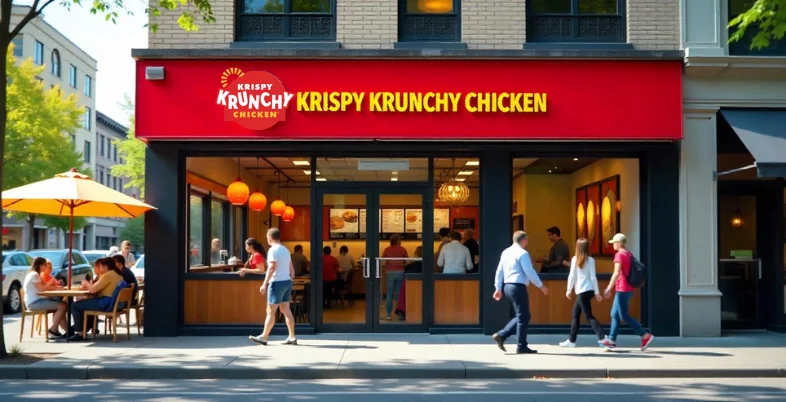
Krispy Krunchy Chicken® is a well known American fast-food brand known for its flavorful Cajun-style browned chicken and Southern-inspired menu. Established in 1989 in Louisiana, the brand has developed quickly, particularly through comfort store areas, advertising speedy, tasty suppers on the go.
Their signature chicken is marinated for 12 hours in a rich blend of flavors and hand-breaded, sometimes browned to achieve a firm texture. In addition to fricasseed chicken, the menu incorporates things like nectar butter rolls, Cajun tenders, wings, fricasseed angle, and jambalaya. Krispy Krunchy Chicken® stands out for its consistent taste, bold flavoring, and commitment to serving crisply made, high-quality food in a quick and convenient manner.
Why Choose Krispy Krunchy Chicken?
Unlike most old-school franchises, Krispy Krunchy Chicken (KKC) operates under a license model, which means no royalty or franchise payments. That’s correct, you won’t be donating a percentage of your revenue every month, which makes this model very desirable for first-time franchisees and small business owners alike.
Established in 1989 and based in Alexandria, Louisiana, KKC strategically places its products in high-traffic retail locations, including convenience stores, gas stations, supermarkets, and truck stops. This lean, scalable business model has enabled the company to expand rapidly without requiring freestanding stores or complex lease arrangements.
Krispy Krunchy Chicken Franchise Cost Breakdown
One of the most significant advantages of the KKC chain is its low cost. Whereas other chicken chains may be as much as $5,00,000 to open, a Krispy Krunchy Chicken operation can be initiated for as little as $10,000 to $40,000, depending on how large and what kind of infrastructure your site has.
| Expense | Estimated Krispy Krunchy Chicken Franchise Cost |
| Licensing Fee | $0 |
| Franchise Fee | $0 |
| Equipment (Fryer, Warmers, etc.) | $10,000 – $25,000 |
| Initial Inventory | $3,000 – $5,000 |
| Signage and Branding | $1,000 – $2,000 |
| Staff Training and Setup | $1,000 – $3,000 |
| Renovations (if needed) | $5,000 – $10,000 |
| Total Estimated Cost | $20,000 – $45,000 |
Note: If your convenience store or retail outlet already has a functioning kitchen, your costs could be on the lower end of the spectrum.
Ongoing Costs and Support
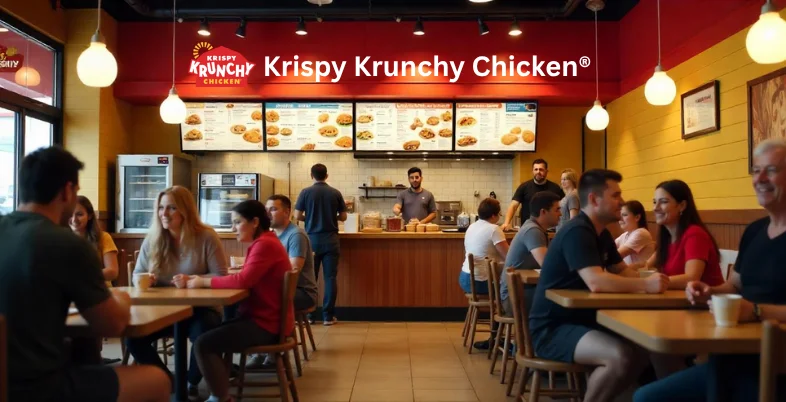
Although Krispy Krunchy Chicken does not demand monthly royalties or advertising charges, you are required to buy all proprietary products and ingredients directly from the company-recommended suppliers. These include their unique marinades, breading, Cajun side dishes, and packaging.
The typical ongoing expenses are:
- Purchases of products (chicken, batter, spices)
- Staffing and labor
- Utilities (electricity, gas for fryers, etc.)
- Maintenance of kitchen equipment
As reported by franchisees, food expenses average 30–35% of revenue, while labor typically ranges from 20–25% based on location and volume.
Location Requirements and Setup
KKC is distinctive in that it does not have to be a stand-alone storefront. The concept is set up as a “store-in-store” venture, typically in:
- Gas stations
- Convenience stores (C-stores)
- Supermarkets
- Travel plazas and truck stops
To be eligible, your site requires:
- A minimum of 200 sq. ft. of kitchen area
- Approved ventilation (exhaust hood systems)
- 220-volt electrical outlet
- Grease traps and fryers in place
- Access to hot and cold running water
The KKC team will also help you design the store layout, plan kitchen equipment, and implement branding to ensure that all aspects meet their requirements.
Explore More Franchise Business
How Much Can You Make? Profit Margins & ROI
Profitability will be based on your traffic, location type, and inventory and labor management. But KKC’s profit opportunity is strong because of low overheads and high repeat customer rates.
Average store sales vary from $300 to $1,500 per day, depending on the location. At heavy-volume locations such as highway truck stops or gas stations, sales can exceed $450,000 per year.
Here’s a rough example of yearly profit potential:
- Annual Income: $350,000
- Food Expenses (35%): $122,500
- Labor Expenses (22%): $77,000
- Utilities & Miscellaneous Expenses (8%): $28,000
- Net Profit: $122,500
If you have a startup with approximately $35,000 in capital, you can achieve full ROI in 6–12 months, assuming moderate daily sales and steady traffic.
Monthly Revenue Projection
The Krispy Krunchy Chicken franchise has a low cost but can yield handsome profits. As of 2026, operating stores are seeing daily revenue ranging from $300 to $1,500, or $9,000 to $45,000 a month.
Top-end numbers are seen at high-volume locations such as truck stops. With an average monthly turnover of approximately $29,000, operators in good locations can pay back the initial investment in their first year of operation, one of the quickest pathways to starting a food franchise opportunities in India business.
Profit Margin Breakdown
To get a better feel for the potential profits of the Krispy Krunchy franchise, let’s break down the numbers. Operating costs average 30-35% of total revenue on food and 20-25% on labour.
This leaves 35-40% of revenue to cover net profit at successful locations. At $350,000 in annual revenue, entrepreneurs can expect to pay home rent and other expenses before netting $122,500. In contrast with other chicken restaurants, the lack of royalties on KKC means more cash in your back pocket each and every month.
Step-by-Step Application Process: How to Apply for a KKC License
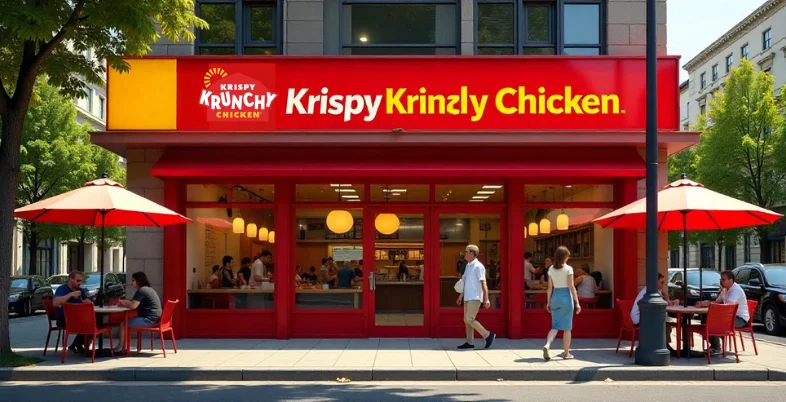
1. Assess Your Current Business (Or Identify a Location)
KKC would rather work with an existing C-store or grocery store, but if you’re new, you can rent or buy a small retail space that accommodates the brand’s kitchen needs.
2. Call Krispy Krunchy Chicken Corporate
Contact them through their official website or call the business development team. You’ll fill out a brief inquiry form to get in touch.
3. Site Evaluation and Approval
Once initial meetings proceed smoothly, a KKC representative will assess your location’s eligibility. This involves inspections of space, traffic patterns, and technical infrastructure.
4. Execute the Licensing Agreement
After that, you’ll execute a non-franchise licensing agreement. This enables you to run under the Krispy Krunchy Chicken brand without paying recurring royalties.
5. Acquire Equipment and Install
You’ll be given a list of approved equipment vendors. Fryer, warmer, prep station, sign, and POS system installations will come afterward.
6. Employee Recruitment and Training
KKC offers in-store training for you and your employees. They instruct staff in food safety, preparation levels, and customer service skills.
7. Launch and Run
When you’re ready to open, you can do so with complete support from corporate staff, promotional materials, and signs.
Franchise Disclosure Document (FDD) Analysis
The Krispy Krunchy Chicken franchise cost not require a typical Franchise Disclosure Document for the simple reason it’s not yet a franchise, but instead a license. Therefore, operators are not subject to FDD rule under the FTC Franchise Rule. Additionally, the growing demand for international food franchises in India such as McDonald’s, KFC, Burger King, Subway, Domino’s, Pizza Hut, and Starbucks reflects the increasing popularity of global food brands, creating strong opportunities for expansion in the Indian quick-service restaurant market.
But, KKC offers a licensing agreement with brand standards, guidelines on approved suppliers, and operational guidelines. This model supported 2,700+ active U.S. sites in 2016. Operators should still seek legal advice from a franchise attorney, because the supplier-exclusivity provisions can affect your long-term food cost (which accounts for about 30-35% of gross revenue).
What Makes Krispy Krunchy Chicken Different?
The company has built a strong brand identity due to its Cajun-spiced fried chicken, seasoned potato wedges, red beans and rice, and honey biscuits. Customers keep coming back for the authentic, Southern-inspired, bold flavors not found in traditional fast-food fried chicken.
Secondly, the no-royalty, no-franchise fee structure makes it highly desirable compared to rivals such as:
| Franchise | Initial Investment | Royalty Fee |
| Krispy Krunchy Chicken | $20,000 – $45,000 | 0% |
| Popeyes | $400,000 – $1.2M | 5% |
| Church’s Chicken | $250,000 – $500,000 | 5% |
| KFC | $1M+ | 5% |
Common Challenges
Although the Krispy Krunchy concept is lean, there are some operational issues that you need to be ready for:
- Multiple fryers in kitchen spaces leading to high temperatures
- Rigorous quality control of ingredients and cooking times
- Consistency of customer service, particularly in busy stores
- Inventory management, particularly on weekends and holidays when demand levels are at their peak
Most of these can be managed effectively, however, with corporate training and streamlined systems.
KKC vs KFC vs Popeyes — Franchise Cost Comparison (2026)
| Feature | Krispy Krunchy Chicken | KFC | Popeyes |
| Initial Investment | $20,000 – $45,000 | $1,000,000+ | $400,000 – $1.2M |
| Franchise Fee | $0 | ~$45,000 | ~$50,000 |
| Royalty Fee | 0% | 5% | 5% |
| Ad Fund Fee | 0% | 5% | ~3–4% |
| Store Format | Store-in-store | Standalone | Standalone |
| Avg. ROI Timeline | 6–12 months | 3–5 years | 3–5 years |
| Prior Experience Required | No | Yes | Yes |
Failure Risk Factors
Like many business opportunities, there are risks to consider, such as the negatives of the Krispy Krunchy Chicken franchise cost. Between 20% and 25% of food-service businesses fail in their first 24 months due to poor siting.
The main threats to KKC include fluctuations in food quality, stock control issues, and hot kitchen environments, as well as declining staff retention. Due to its walk-in nature, spots receiving fewer than 500 passers-by a day might not be enough. For 2026, with higher chicken & fast food franchise costs impacting food costs, which in turn are nearing the 35% threshold, margins have been slightly squeezed for smaller sites.
Final Thoughts
If you want a low-priced, high-potential food venture in America, Krispy Krunchy Chicken is notable for its combination of low price, brand, and operating ease. Without franchise or royalty fees, quick startup, and robust training support, it’s one of the most franchisee-friendly models in the quick-service food industry today.
Whether you already own a gas station or are seeking to diversify your investment portfolio, Krispy Krunchy Chicken has a tested recipe—not only for chicken, but for success.
Explore More:
FAQs
Is Krispy Krunchy Chicken a franchise or license?
It operates as a licensed brand, not a traditional franchise. This means no franchise fees or royalties, but you must follow brand guidelines and source all products from approved suppliers.
Can I open a standalone Krispy Krunchy Chicken store?
KKC primarily partners with existing retail outlets. While standalone setups are possible, they’re not the company’s primary focus. The model thrives in high-footfall, multi-service environments like gas stations or supermarkets.
How long does it take to open?
From initial contact to grand opening, most locations can be launched in 60–90 days, depending on equipment delivery and renovations.
Do I need restaurant experience?
No prior experience is required. KKC provides comprehensive training and onboarding, making it accessible for first-time food service operators.
Can I open multiple locations?
Yes, multi-unit operators are welcome. Many franchisees expand to several locations once their first store proves profitable.