
In the competitive business environment, the traditional annual performance review is fast becoming a thing of the past. Companies are becoming aware of the need for efficient loan management to have constant feedback and data-driven insights, as well as to simplify the evaluation process. It is in this regard that employee appraisal software would be of immense value.
These are advanced systems that revolutionise the way businesses evaluate, develop and maintain their human resources by automating the evaluation process, enabling substantial conversations between management and their staff and delivering analytics that are easy to utilise to make strategic decisions.
The current employee appraisal software is much more than just rating software. The solutions are an all-encompassing integration of goal monitoring, 360-degree feedback, employee development strategy, and AI-driven insights to establish a holistic performance management solution. This in-depth report covers the best 11 employee appraisal software in the market today that will assist you in making the right choice, and which will align with the goals of your organisation.
What Are Employee Appraisal Software?
Employee appraisal software can be described as online technologies that are specifically created to facilitate and optimise the process of performance evaluation in organisations. These applications automate activities that used to be done manually and time-intensive, like scheduling a review cycle, acquiring feedback via multiple parties, measuring goal progress and creating extensive performance reports.
Through the centralisation of performance information and the ability to offer frameworks on which to do appraisals, these solutions can help HR teams and managers to perform appraisals that are more consistent, objective, and meaningful.
The new platforms are equipped with innovations such as AI-based analytics, feedback systems and the ability to connect with the existing HR, and performance management as a visual aid to employee growth and organisational performance is no longer a burden on the administrative system but a strategic instrument of organisational success.
Essential Features to Look for in Employee Appraisal Software
The choice of a suitable platform will depend on the capabilities that will achieve the highest value in your organisation. Although the priorities of different businesses may differ, some basic characteristics of performance management are essential. All these features will guarantee that your investment will produce quantifiable outcomes in terms of a higher level of employee engagement, reduced administrative streamlining, and practical insights that will be used in strategic workforce planning.
- Templated Reviews: Each organisation has distinct evaluation criteria, competencies and performance standards that are reflective of their organisation and business goals.
- 360-Degree Feedback Capabilities: Expansive performance measurement demands the contribution of various standpoints: the managers, peers, direct reports, and self-assessment.
- Goal Tracking and OKR Management: The performance reviews should be linked to specific measurable goals that help in aligning the organisation with its strategy.
- Automated Workflow and Reminders: As an organisation expands, there is greater complexity in the manual coordination of performance reviews across the various departments.
- Analytics and Reporting Tools: Data-driven insights: performance management is no longer based on subjective analysis, but it is based on strategic decision-making.
Read more: Best Local SEO Moves
Comparison Table for Employee Appraisal Software
| Software Name | Rating | Best Feature |
| Lattice | 4.7/5 | AI-powered HR analytics for workforce planning |
| BambooHR | 4.6/5 | Seamless HR and payroll integration |
| Peoplebox.ai | 4.5/5 | AI-driven insights for employee growth |
| 15Five | 4.5/5 | Weekly performance check-ins system |
| Culture Amp | 4.6/5 | Real-time feedback and engagement tracking |
| Engagedly | 4.4/5 | Recognition and rewards integration |
| PerformYard | 4.5/5 | Highly customizable review cycles |
| Zoho People | 4.3/5 | Budget-friendly with AI insights |
| Trakstar | 4.4/5 | Goal-based performance evaluations |
| Workday | 4.5/5 | Enterprise-grade compliance features |
| AssessTEAM | 4.2/5 | Multilingual interface for global teams |
Top 11 Employee Appraisal Software
1. Lattice
Rating: 4.7/5
Website: https://lattice.com/
Best Use Cases: Continuous feedback and strategic workforce planning for growing teams
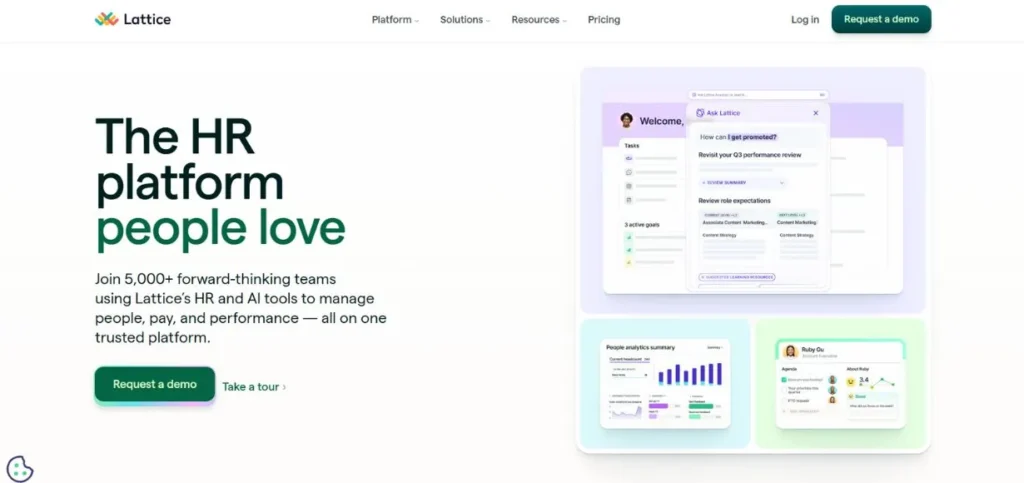
Lattice is a continuation of modern performance management, where organisations are no longer confined to annual review cycles but instead shift to a culture of constant growth and participation. This is an effective platform that integrates real-time feedback systems with advanced analytics to enable businesses to develop high-performance teams. The analytics of the platform enable HR leaders to have an analytical perspective of the future of the workforce by making critical decisions based on predictive analytics, whether that is the risk of a flight or potential leadership.
Having an easy-to-use interface and extensive customisation, Lattice can fit companies of any size and industry without compromising the quality of performance. The focus on the platform around continuous discussions as opposed to periodical check-ins generates a more active and responsive performance management culture that appeals to the needs of the current workforce.
Key Features:
- Continuous feedback system
- Employee engagement surveys
- Customizable development plans
- OKR and goal tracking
- AI-powered HR analytics
Pros:
- Comprehensive performance management suite
- Excellent user interface design
- Strong analytics capabilities
Cons:
- Higher price point
- Learning curve for admins
- Limited customisation options
Pricing: Starts at $11/user/month
2. BambooHR
Rating: 4.6/5
Website: https://www.bamboohr.com/
Best Use Cases: All-in-one HR solution with integrated performance management capabilities
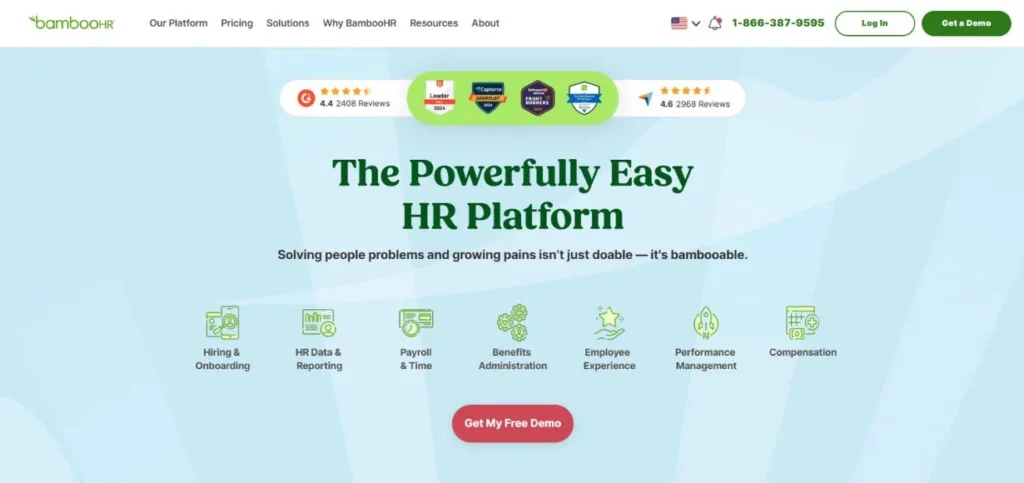
BambooHR is a performance management tool that turns into an extension of regular HR functions and not a separate administrative activity. Being a holistic human resources platform, it provides a smooth interaction between performance appraisals, management of employee data, payroll and benefits management.
Employee self-assessment capabilities of BambooHR make employees feel in control of their growth process, and promote a culture of responsibility to become better employees. The fact that the review templates can be customised to mirror your specific organisation and its values and competencies, coupled with the automated reminders, ensures that the process flows steadily without the need to impose regular hands-on on it.
Key Features:
- Customizable performance reviews
- Employee self-assessments
- Goal alignment tools
- Automated review reminders
- HR and payroll integration
Pros:
- User-friendly interface
- Comprehensive HR solution
- Excellent customer support
Cons:
- Custom pricing only
- Limited advanced analytics
- Can be expensive
Pricing: Custom pricing
3. Peoplebox.ai

Rating: 4.5/5
Website: https://www.peoplebox.ai/
Best Use Cases: AI-driven performance reviews aligned with company objectives
Peoplebox.ai introduces artificial intelligence to the centre of employee evaluation software, which provides organisations with an advanced platform to replace performance reviews as a routine evaluation process with more meaningful conversations about strategies to inspire employees to grow truly. The AI functionality of the platform examines performance patterns and finds developmental opportunities, as well as offers managers information-supported advice on coaching and support.
Another feature that is especially useful with Peoplebox.ai is that the company focuses on aligning the personal target with larger company goals through powerful OKR management tools. Connections to collaboration tools, such as Slack and Microsoft Teams, introduce performance management into the work process, which ensures timely and contextual feedback and recognition instead of limiting them to review cycles.
Key Features:
- 360-degree feedback
- Goal tracking and OKRs
- Performance review automation
- AI-driven growth insights
- Slack and Teams integration
Pros:
- Strong AI capabilities
- Seamless workflow integration
- Excellent goal alignment
Cons:
- Newer platform
- Limited enterprise features
- Smaller user base
Pricing: Starts at $7/user/month
4. 15Five
Rating: 4.5/5
Website: https://www.15five.com/
Best Use Cases: Weekly check-ins and continuous performance improvement culture
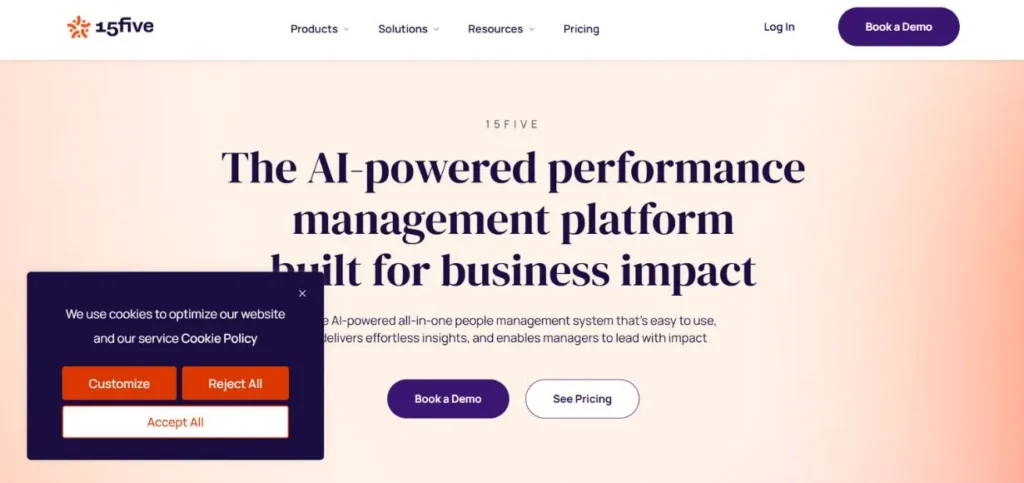
15Five transforms the traditional approach to performance management that involves having formal reviews that are often not held, to daily or regular conversations between employees and managers. The weekly check-in feature that is the signature of the platform helps the team members to provide updates on progress, identify roadblocks and celebrate wins weekly, and maintain the open channel of communication and make sure that the issues are discussed as early as possible instead of growing until annual review. Such a consistent feedback system fits the current trends of the workforce that requires immediate feedback and encouragement.
The mobile-friendly feature acknowledges the current reality of the distributed workforce by allowing the remote workers and mobile managers to remain connected and involved in the performance tracking irrespective of the location. Through this culture of frequent communication and constant change, 15Five can assist organisations in creating better relationships between managers and their employees that can result in retention and engagement.
Key Features:
- Weekly performance check-ins
- Peer and manager feedback
- Customizable review templates
- AI-driven coaching insights
- Mobile-friendly tracking
Pros:
- Promotes continuous feedback
- Excellent for remote teams
- Intuitive user experience
Cons:
- Less comprehensive analytics
- Limited customisation depth
- Requires cultural adoption
Pricing: Starts at $9/user/month
5. Culture Amp
Rating: 4.6/5
Website: https://www.cultureamp.com/
Best Use Cases: Data-driven employee development with engagement insights
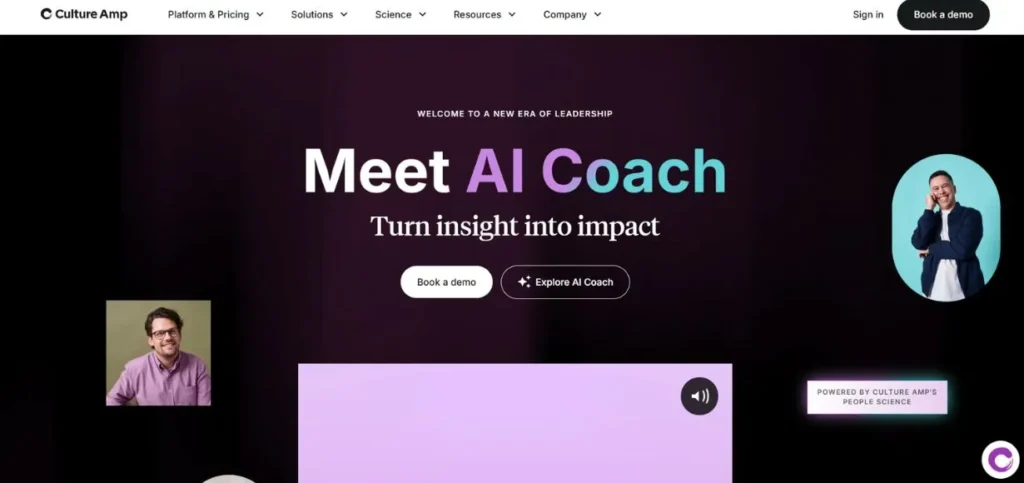
Culture Amp is unique in the sense that it acknowledges that performance management will never be effective without employee engagement and organisational culture programs. This all-in-one platform integrates both powerful performance appraisal functionality and advanced employee engagement surveys and sentiment analysis, which gives HR executives an overview of the drivers of workforce health and performance.
The features of the employee development planning help to align the personal goals with the organisational prospects, which helps with the systematic career development that is beneficial to both the business and employees. Goal alignment systems help in making sure that all individuals are working towards goals and objectives that are common, and yet at the same time making use of visibility so as to see progress and accomplishments. The ability to integrate seamlessly with the current HR systems implies that Culture Amp complements instead of disrupts the current working processes, and, therefore, adoption of Culture Amp will be more successful.
Key Features:
- Real-time feedback tracking
- Employee development planning
- AI-powered engagement insights
- Goal alignment features
- HR system integration
Pros:
- Comprehensive engagement focus
- Excellent analytics platform
- Strong development tools
Cons:
- Custom pricing only
- Can be complex
- Higher learning curve
Pricing: Custom pricing
6. Engagedly
Rating: 4.4/5
Website: https://engagedly.com/
Best Use Cases: Performance management combined with recognition and learning initiatives
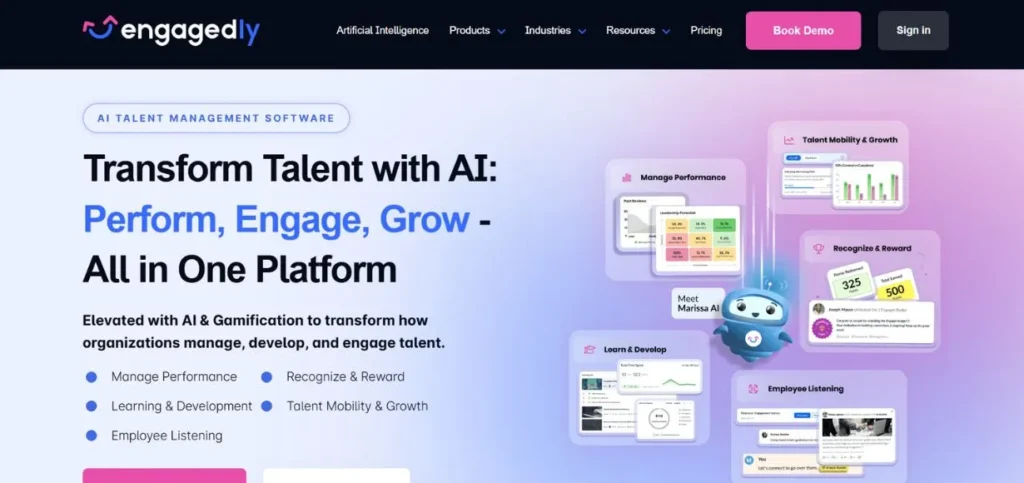
Engagedly considers talent management as a holistic approach by balancing performance appraisal with employee engagement, recognition and continuous learning. The platform acknowledges the fact that motivation, appreciation, and constant skill development are the elements of high performance developed not only periodically. Its 360-degree feedback system can capture extensive performance views among peers, managers and self-assessments, and this eliminates bias and offers well-rounded information.
The linkage with learning management systems brings the performance gaps directly to the development opportunity, and the feedback should be turned into action-based skill-building programs. Employee goal-setting tools can also match individual goals and organisational priorities and establish a simple line-of-sight between work and strategic results. This holistic methodology is what renders Engagedly especially efficient in terms of organisations aiming at creating high-performance cultures that are based on the principles of continuous improvement and employee recognition.
Key Features:
- 360-degree feedback
- Recognition and rewards
- AI-driven performance insights
- Learning management integration
- Employee goal-setting tools
Pros:
- Comprehensive engagement features
- Strong recognition capabilities
- Excellent learning integration
Cons:
- Annual pricing model
- The interface could improve
- Steep learning curve
Pricing: Starts at $5,000/year
Also read: Best Staffing Agencies for Remote Jobs in USA
7. Perform Yard
Rating: 4.5/5
Website: https://www.performyard.com/
Best Use Cases: Highly customizable performance management for unique organisational needs
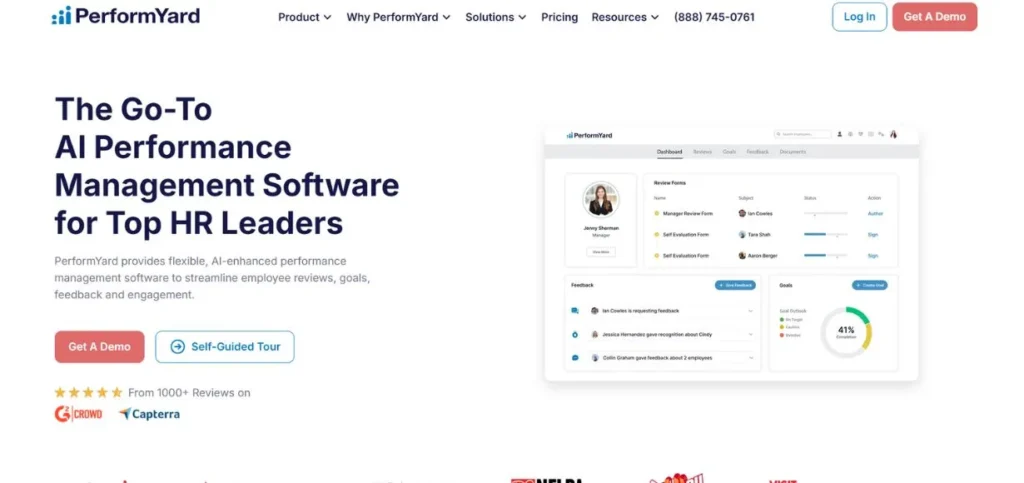
PerformYard is one of the best in offering flexibility and customisation to meet the needs and forms of assessment of various organisations. The platform is also aware that the one-size-fits-all approach to performance management can hardly be successful, which is why it provides a highly customizable solution that can be shaped to suit your particular processes instead of making you fit the inflexible templates. Custom review cycles allow organisations to create appraisal schedules to match business cycles- quarterly, semi-annual, annual or project-based appraisal cycles.
Individual and team measures that are shown in the form of employee performance dashboards are easy to read and identify trends, high performers and areas requiring attention. This flexibility, integration ability visualisation make PerformYard especially attractive to organisations with non-standard or non-complex performance management needs.
Key Features:
- Custom review cycles
- Goal tracking and analytics
- KPI-based monitoring
- Seamless HRIS integrations
- Performance dashboards
Pros:
- Highly customizable
- Affordable pricing
- Strong integration capabilities
Cons:
- Basic user interface
- Limited mobile functionality
- Smaller support team
Pricing: Starts at $5/user/month
8. Zoho People
Rating: 4.3/5
Website: https://www.zoho.com/people/
Best Use Cases: Budget-conscious organisations seeking comprehensive HR and performance features
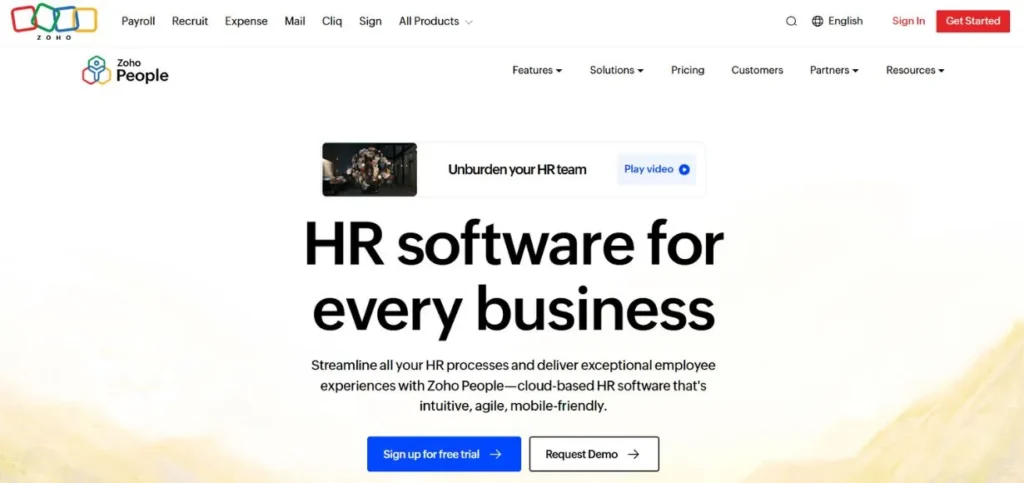
Zoho People is a powerful employee appraisal software that provides more advanced and comprehensive performance management at a very affordable price, which is accessible to any organisation of any size and budget. Being a component of the more comprehensive Zoho ecosystem, it is exceptionally integrated with the other business applications, such as CRM, project management software, to provide a single platform in which all operations can be managed.
Automated performance review cycles also remove manual scheduling and tracking; hence, the process of evaluation takes place regularly and at the appropriate time without administrative supervision. Workforce analytics and reporting create data-driven insights that are used in strategic decision-making regarding allocation of talent, investment in development and planning of organisations. All these factors are combined with affordability, functionality, and integration capabilities, which make Zoho People a great tool to be used by growing businesses that want to get in on technology investments as much as possible.
Key Features:
- Customizable performance appraisals
- Self and peer reviews
- AI-powered HR insights
- Automated review cycles
- Workforce analytics and reporting
Pros:
- Extremely affordable
- Comprehensive feature set
- Strong Zoho ecosystem
Cons:
- Interface feels dated
- Limited advanced features
- Support can be slow
Pricing: Starts at $1.50/user/month
9. Trakstar
Rating: 4.4/5
Website: https://www.trakstar.com/
Best Use Cases: Goal-based evaluations with coaching and development focus
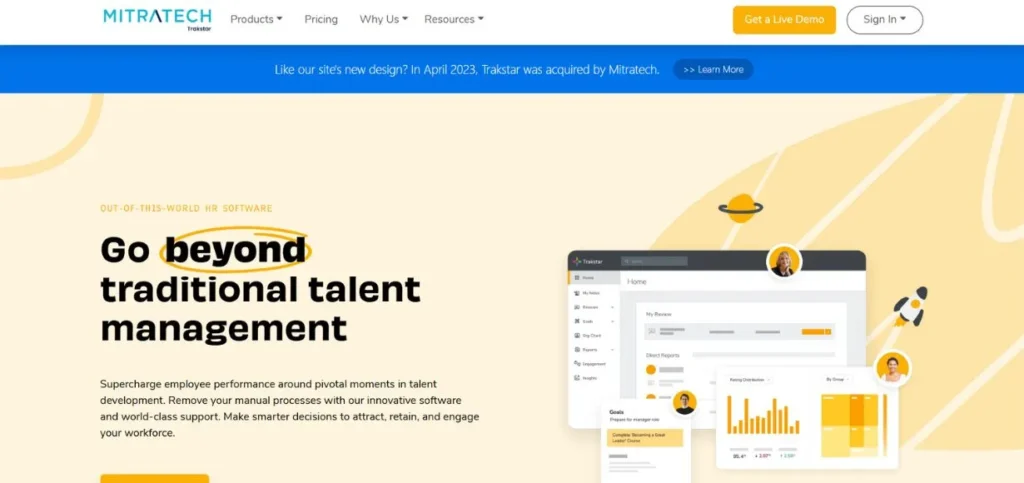
Trakstar is an employee performance management focused on goals that enable an individual’s performance to be associated with the success of an organisation via systematic tracking and evaluation. The platform focuses on meaningful assessments that are used to spur professional development as opposed to recording previous performance.
What is actually unique about Trakstar is that it focuses on employee coaching and training solutions, which offer in-built tools and customised development plans that translate performance feedback into growth initiatives that can be implemented. Trakstar is especially useful to organisations that believe in investing in the potential of their employees and developing solid internal human talent pipelines through continuous improvement and skill acquisition.
Key Features:
- Customizable appraisal templates
- Goal tracking and assessment
- 360-degree feedback
- AI-driven performance insights
- Coaching and training tools
Pros:
- Strong coaching features
- Excellent goal tracking
- Comprehensive feedback system
Cons:
- Custom pricing only
- Can be complex
- Limited integrations
Pricing: Custom pricing based on enterprise needs
10. Workday
Rating: 4.5/5
Website: https://www.workday.com/
Best Use Cases: Enterprise-grade performance management with compliance and succession planning
Workday is a leading enterprise human capital management system that contains a complex performance appraisal built to fulfil the needs of large and intricate organisations that have a high-performance demand. Goal alignment and continuous feedback mechanisms encourage a continuous conversation on performance and serve to ensure that individual goals are beneficial to the overall organisational plans. The scalability and enterprise-level security make it the solution of choice in organisations that need the most robust and comprehensive performance management implementation available.
Key Features:
- AI-driven performance tracking
- Development and succession planning
- Continuous feedback and goals
- Custom industry workflows
- Compliance and reporting
Pros:
- Enterprise-grade capabilities
- Excellent scalability
- Comprehensive functionality
Cons:
- Very expensive
- Complex implementation
- Requires dedicated resources
Pricing: Custom pricing
11. AssessTEAM
Rating: 4.2/5
Website: https://www.assessteam.com/
Best Use Cases: Global organisations requiring multilingual performance management solutions
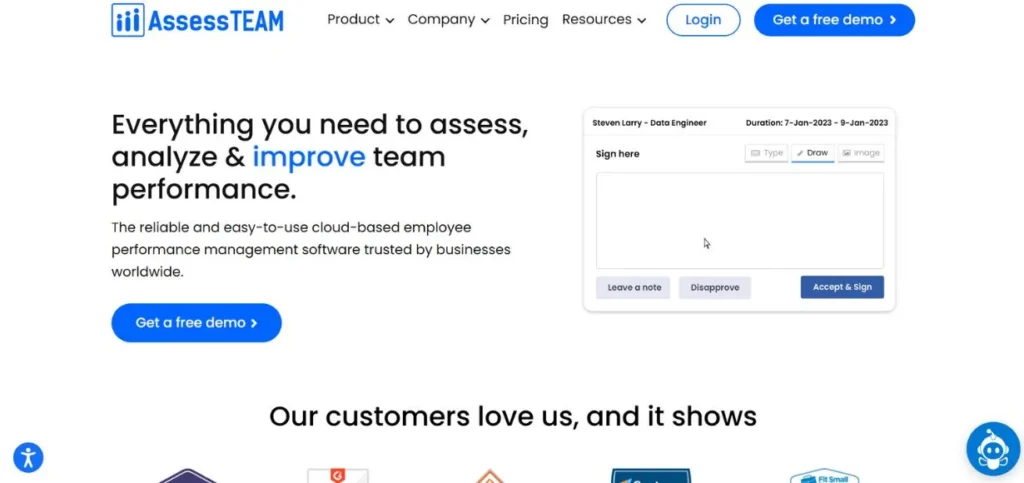
AssessTEAM is a cloud-based platform that specifically handles issues of managing performance in geographically dispersed, multilingual groups of employees with worldwide organisations in mind. The performance tracking feature, which is real-time, is used to track the contributions made by employees and offer feedback opportunities on the same, thus providing a way to recognise and correct courses in time.
AssessTEAM is also a great value in terms of price, as it establishes a level of competition with entry-level solutions and is able to offer the functionality of the middle market at a low price that allows organisations with international distribution to have the same performance management practices across countries.
Key Features:
- Real-time performance tracking
- Project profitability analysis
- Customizable evaluation templates
- AI-powered workforce insights
- Multilingual interface
Pros:
- Multilingual support
- Project-focused features
- Affordable pricing
Cons:
- Smaller market presence
- Limited integrations
- Basic analytics
Pricing: Starts at $5/user/month
How to Choose the Right Employee Appraisal Software
To choose the right platform, it is important to assess the needs of your organisation, current technology infrastructure, as well as long-term goals of managing talent. The appropriate decision will facilitate the administrative operations, improve the engagement of the employees and offer practical suggestions that lead to strategic labour selection. These are the most important aspects to take into account.
- Establish Your Performance Management Philosophy: Work out what you mean by your performance management techniques before considering the activities within each platform.
- Evaluate Integration Requirements: Modern HR technology ecosystems commonly consist of a variety of interdependent systems for payroll, recruiting, learning management and employee data management.
- Take User Experience and Adoption into Account: No matter how powerful a given platform becomes, it can still give the staff and management little to no value when it proves difficult to navigate or cumbersome.
- Consider Scalability and Customisation: The platform that you have selected must be capable of supporting your needs at present and future-proofed to support your future development and requirements as your organisation grows or your performance management strategy becomes more mature.
- Balance Features with Budget: Although a full-scale functionality is attractive, the priciest platform is not always the appropriate one to consider in your particular case.
Conclusion
The introduction of an appropriate employee appraisal software will be an appropriate investment in the most valuable asset of your organisation- people. The modern performance management platforms are much more than a simple rating system and scheduling reviews, as we have seen in this whole guide. They offer advanced models of recurrent feedback, goal line, employee improvement, and evidence-based talent judgment that have a direct effect on business performance. Are you a small company that wants to create organised evaluation procedures or a large organisation that demands advanced analytics and compliance options? The current market will have the answer to virtually any requirement and budget.
When evaluating your options, keep in mind that employee appraisal software will be the core to a high-performance culture of transparency, endless improvement, and alignment of individual efforts and organisational goals. The appropriate platform will provide managers with tools and insights to make better coaches, employees with the opportunity to own their development and HR leaders with strategic intelligence that guides important workforce decisions.
Frequently Asked Questions
Q. How much does the average employee appraisal software cost?
A: Pricing, depending on features and size of organisation, can differ greatly, with standard solutions having prices between $1.50 and 11 per user per month, but enterprise platforms normally demand a specific quote. The majority of providers sell tier plans with added features as the cost swings higher.
Q. Is it possible to integrate employee appraisal software with the current HR systems?
A: Yes, almost all the current platforms can be connected with popular HRIS, payroll, and learning management systems via native connectors or API, which guarantees the flow of data and decreases the load on the administration.
Q. What is the duration of implementation of performance appraisal software?
A: The time span of implementation can vary from several weeks to deploy simple cloud-based solutions to several months to deploy complex enterprise implementations that entail a lot of customisation, data migration, and change management programs.
Q. Are the employees supposed to receive special training to use these platforms?
A: The vast majority of intuitive platforms need employees to have very few training sessions; however, managers and administrators usually receive more comprehensive training to utilise all the advantages of the system and make proper use of its features to administer it efficiently.
Q. So what is the difference between the continuous feedback and the old-fashioned annual reviews?
A: Continuous feedback entails year-round and real-time performance discussions, and the traditional annual reviews are done once a year. In combination with frequent check-ins, which are used to update a detailed periodical assessment, modern methods frequently incorporate both approaches.
Continue Exploring: Best ERP Software Solutions