
Your startup is not doing badly due to bad ideas. This does not work, due to lack of follow-ups, forgotten leads, have untidy spreadsheets and you end up with some opportunity that falls through the cracks. At first, customer management does not seem challenging at all, some emails, a small note, possibly a spreadsheet to trace the chats. However, things go out of order as the business expands. The leads turn cold, there is no communication and sales are dependent on memory rather than systems.
An effective CRM makes all the difference. The best CRM software for startups is not one that merely sits and stores contacts but rather it is the engine that drives sales and relationships as well as a fragmented interaction into consistent growth.
This blog explains what exactly a CRM is, why it can be important as you grow as a team, and the most useful software that can help you stay smarter, faster and stronger at day one.
What is CRM Software?
Customer Relationship Management (CRM) software is a digital tool that helps businesses manage their interactions with customers, leads, and prospects. A CRM system stores important information such as contact details, communication history, sales activities, and customer preferences in one centralized platform. Instead of relying on scattered spreadsheets, emails, or manual notes, companies can organize all customer-related data in a structured and easily accessible system.
CRM software also helps businesses track the entire customer journey—from the first contact with a potential lead to closing a sale and maintaining long-term relationships. Most modern CRM platforms include features such as sales pipeline management, task automation, email integration, analytics dashboards, and customer support tools. Popular platforms like HubSpot CRM, Zoho CRM, and Salesforce provide businesses with tools to manage sales, marketing, and customer service in one place.
Why Startups Use CRM Software
Startups often work with small teams and limited resources, so managing customer relationships efficiently becomes very important. CRM software helps startups organize their sales process, track leads, and improve communication with customers.
One major reason startups use CRM software is to avoid losing potential leads. When customer information is stored in one system, sales teams can easily follow up with prospects and keep track of every interaction. CRM tools also help automate repetitive tasks such as sending follow-up emails, scheduling reminders, and updating contact records.
Another benefit is better sales visibility. With CRM dashboards and reports, startups can see which deals are progressing, which leads need attention, and where their revenue opportunities are coming from. This helps founders and sales teams make smarter business decisions.
Finally, CRM software helps startups scale their operations. As the business grows and the number of customers increases, a CRM system ensures that all customer interactions remain organized, efficient, and consistent.
Quick Comparison: 15 Best CRM Software for Startups
| CRM Software | Best For | Key Features | Starting Price |
|---|---|---|---|
| HubSpot CRM | Startups needing a powerful free CRM | Contact management, email tracking, sales pipeline, meeting scheduler | $15/month |
| Zoho CRM | Budget-friendly CRM with strong customization | AI assistant, workflow automation, reporting dashboards | $14/user/month |
| Pipedrive | Sales-focused startups | Visual pipelines, activity-based selling, forecasting tools | $14/month |
| Monday Sales CRM | Teams needing flexible and visual CRM systems | Custom boards, automation recipes, lead capture forms | $12/user/month |
| Freshsales | Startups wanting AI-powered sales insights | Built-in dialer, AI lead scoring, email tracking | $15/user/month |
| Salesforce Starter | Startups planning long-term scaling | Guided setup, unified customer view, built-in reports | $25/user/month |
| Close CRM | High-volume sales teams | Power dialer, SMS outreach, automated email sequences | $49/user/month |
| Zendesk Sell | Businesses needing sales and support integration | Mobile sales app, pipeline visibility, ticket integration | $19/user/month |
| Keap | Startups focusing on marketing automation | Campaign builder, lead nurturing, invoicing | $159/month |
| Insightly | Project-based startups and agencies | Project tracking, workflow automation, milestone tools | $29/month |
| Copper CRM | Google Workspace users | Gmail integration, auto data capture, pipeline tracking | $29/month |
| Nimble CRM | Social media-driven sales teams | Social profile enrichment, relationship tracking | $24.90/month |
| Capsule CRM | Small startups wanting simplicity | Contact management, task tracking, sales milestones | $18/month |
| Agile CRM | Startups needing all-in-one CRM features | Marketing automation, telephony, helpdesk | $8.99/month |
| ActiveCampaign | Email-focused marketing automation startups | Email marketing, automation builder, lead scoring | $15/month |
List of Top 15 CRM Software for Startups
1. HubSpot CRM
Website: hubspot.com
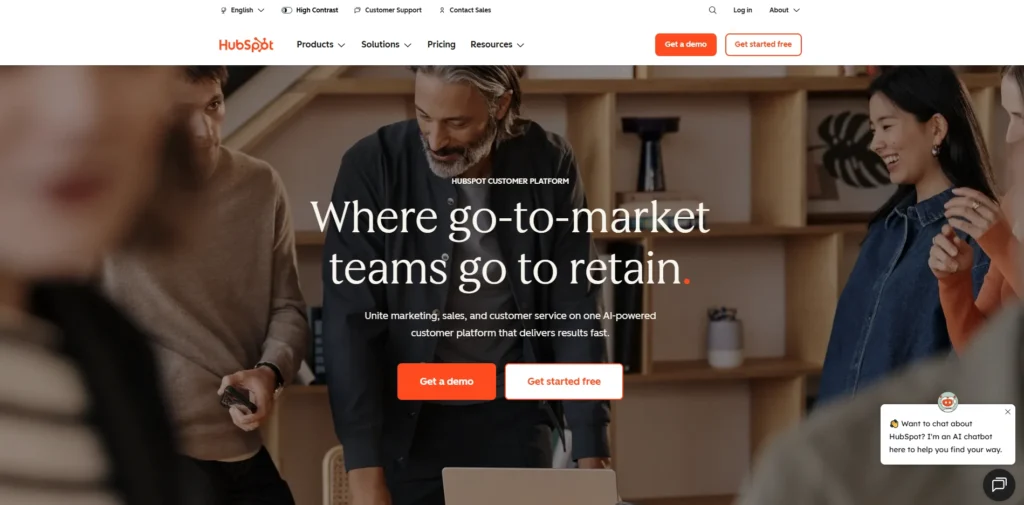
HubSpot CRM is characterized by a good reputation because its free version is very generous, which is great when a company is only at the beginning of its development. It enables you to put marketing, sales and customer care in one place. The capability to trace sales pipelines and contact management as well as monitoring email activity do not require a long learning curve. HubSpot Agencies also widely recommend this platform for startups because of its flexibility and scalability. As the business grows you can also introduce paid features such as custom reports, AI insights, and advanced automation. It would mark a start in both rapid and progressive growth.
Key Features:
- Contact management system
- Email tracking tools
- Meeting scheduler link
- Visual sales pipeline
Pros:
- Strong free version
- Very intuitive interface
- Scales with business growth
Cons:
- Paid plans are expensive
- Upgrades cost a lot
Price: starts at $15/month
2. Zoho CRM
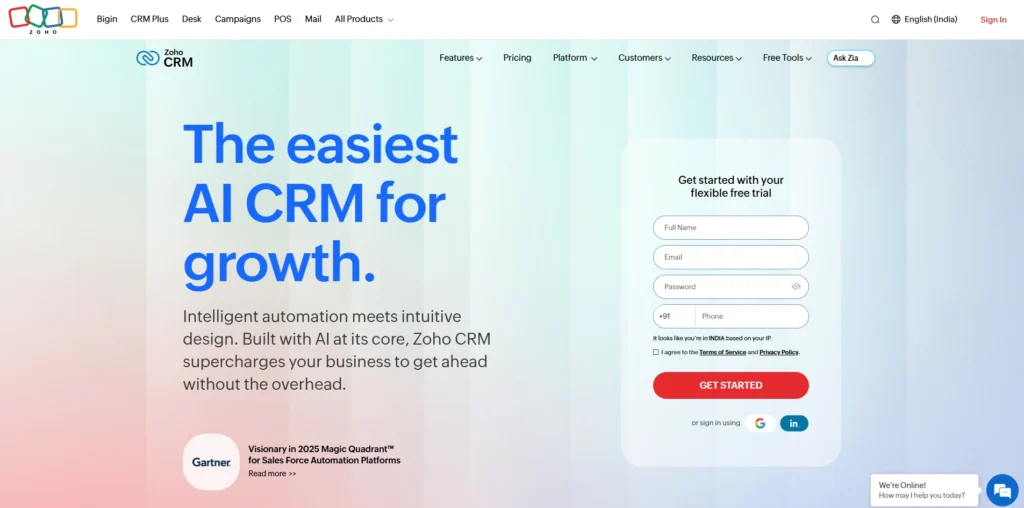
Website: zoho.com/crm
Salesforce is one of the established CRM Software for Startups. The Starter edition is very convenient for startups. Salesforce Starter offers configured and small team-specific dashboards. It brings together sales, service, and marketing fundamentals into a single point of view. The main benefit is that your startup will have an opportunity to grow without necessarily having to adjust the software. It is appropriate for startups
Key Features:
- AI‑powered sales assistant
- Automation of advanced workflows.
- Custom reporting dashboards.
- Multichannel customer service
Pros:
- Very cost‑effective
- Customisable to a great extent.
- Large app ecosystem
Cons:
- Interfaces may get clogged.
- Learning curve is steep
Price: starting price of $14 per user per month.
3. Pipedrive
Website: pipedrive.com
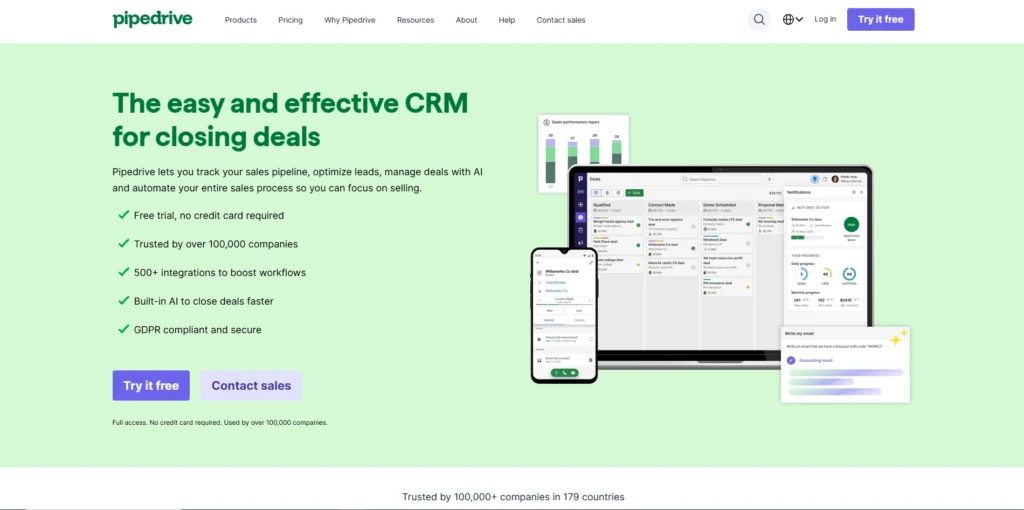
Pipedrive was developed by salespeople. It is concentrated on visual and action based selling. The tool assists startup teams to complete the correct tasks to make moves on deals. It maintains simplicity in interface, pipeline management, and email integration as well as sales forecasting. The drag-and-drop Kanban boards makes it easier for a quick preview of where each prospect stands. Pipedrive provides a fast, distraction-free work environment to high-speed sales departments.
Key Features:
- Visual sales pipelines
- Activity‑based selling
- Custom deal stages
- Revenue forecasting tools
Pros:
- Extremely user‑friendly
- Great visual design
- Excellent sales tracking
Cons:
- Limited marketing tools
- Basic reporting features
Price: $14/month
4. Monday Sales CRM
Website: monday.com/crm
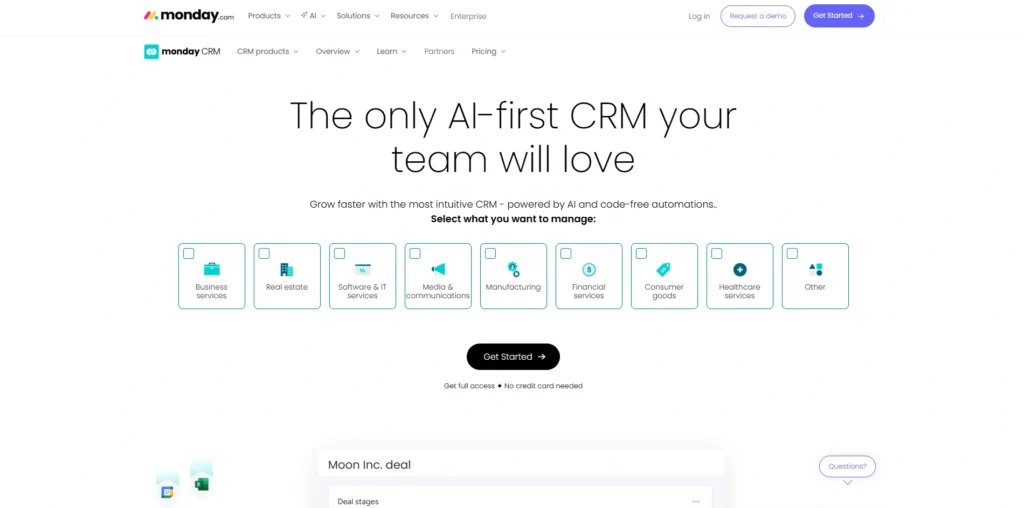
Monday Sales CRM transforms the beloved and flexible Monday project management framework into a sales management tool. This is why startups are eager to use it since it is customizable, which means CRM can be designed to appear and operate in the way they desire. As a CRM Software for Startups, it allows collaboration with teams and enables various departments to discuss deals or accounts without any difficulty. Data management is made to look more interesting, engaging and highly systematic through automation recipes, and vibrant colour-coded dashboards.
Key Features:
- Highly customizable boards
- Team collaboration tools
- Automation builder recipes
- Lead capturing forms
Pros:
- Visual ability to stretch beyond imagination.
- Good group co-operation.
- Easy to implement
Cons:
- Not a traditional CRM
- Pricing can get complicated
Price:It begins at $12 per user per month
5. Freshsales
Website: freshworks.com/crm
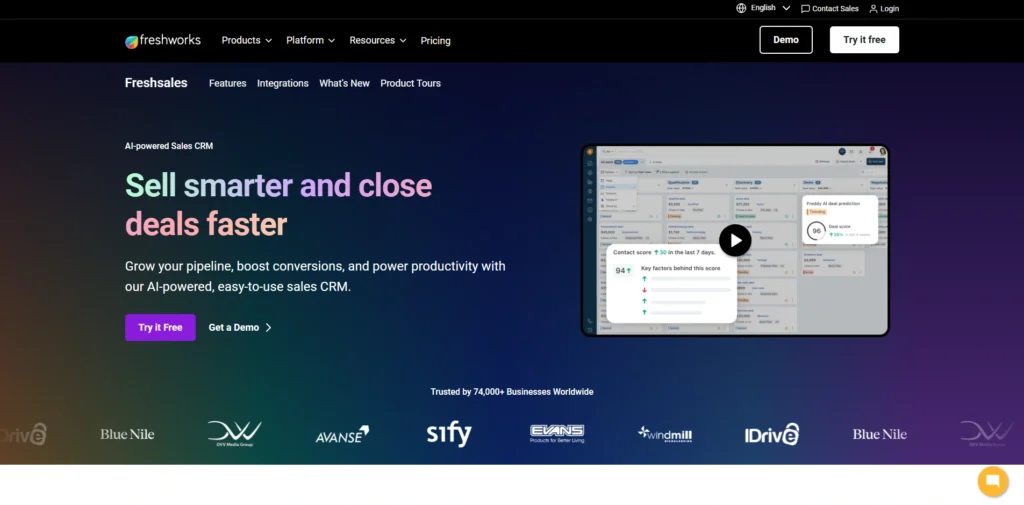
Freshsales is an extension of Freshworks. It is a CRM that bridges the gap between sales and marketing. It enjoys popularity among startups since it includes a phone and email interface, making salespeople work with a limited number of apps. The application runs an artificial intelligence engine named Freddy. Freddy assigns a score to each lead depending on their performance. This will assist small teams in concentrating on the most promising opportunities. Freshsales is straightforward, simple and quick to learn and startup companies aim to boost sales in a few minutes.
Key Features:
- Built‑in phone dialer
- AI lead scoring
- Visual sales journeys
- Integrated email tracking
Pros:
- Good built‑in communication
- Smart AI features
- Easy interface
Cons:
- Limited third party integration.
- Support can be slow
Price: $15/user/month
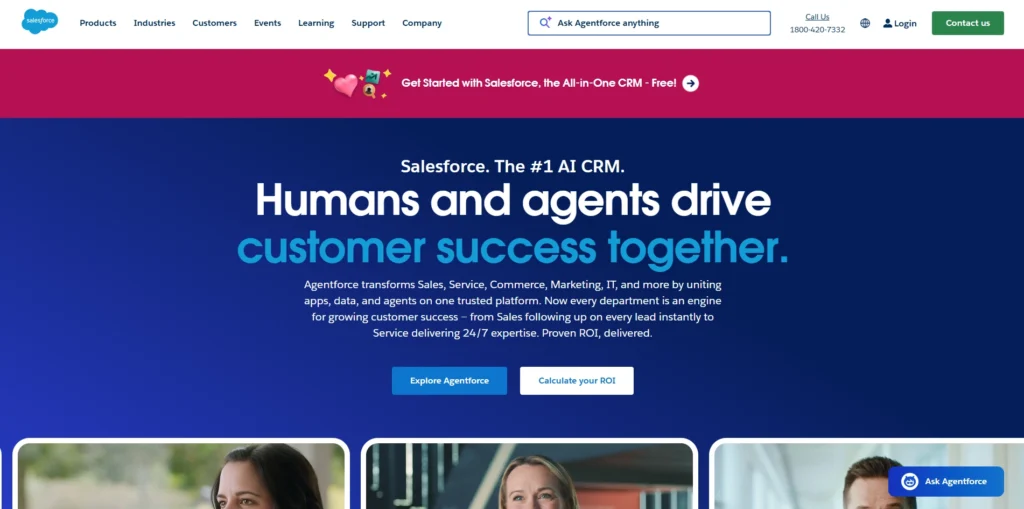
6. Salesforce Starter
Website: salesforce.com
One of the established CRM Software for Startups is Salesforce. Startups find it easy with the Starter edition. Salesforce Starter provides guided setup and unique dashboards designed specifically for small teams. It brings together sales, service, and marketing basics into one platform. The key advantage is that your startup can scale without the need to change software later. It is ideal for startups that are highly ambitious and expect rapid, large-scale growth.
Key Features:
- Guided setup process
- Unified customer view
- Ready‑made reports
- Email outreach tools
Pros:
- Great growth potential
- Strong core system
- Reliable standard
Cons:
- Complex start
- Tends to be costly to upgrade
Price: $25 per user per month.
7. Close CRM
Website: close.com
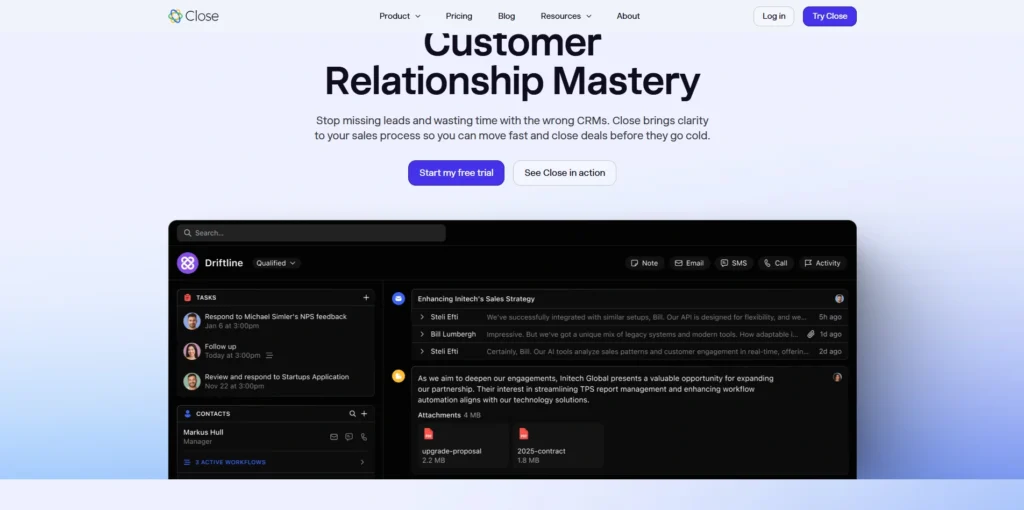
Close CRM is a powerhouse platform developed to suit high-volume sales teams. When your startup needs to use cold calling and SMS outreach, as well as speedy email sequences, then Close is your solution. It has native calling and predictive dialers, inbuilt SMS and robust automation sequences straight off the shelf, which do not need third-party add-ons. The interface is very rapid and is devoted solely to communication and deal-making. Close is a productivity multiplier to aggressive startup sales teams who are interested in connecting with as many people as possible every day and reducing the amount of data entered into the system.
Key Features:
- Built‑in power dialer
- Native SMS texting
- Automated email sequences
- Integration of Zoom meeting
Pros:
- Excellent communications
- Very fast interface
- No extra add‑ons needed
Cons:
- Higher starting price
- Limited marketing tools
Price: $49 per user per month.
8. Zendesk Sell
Website: zendesk.com/sell
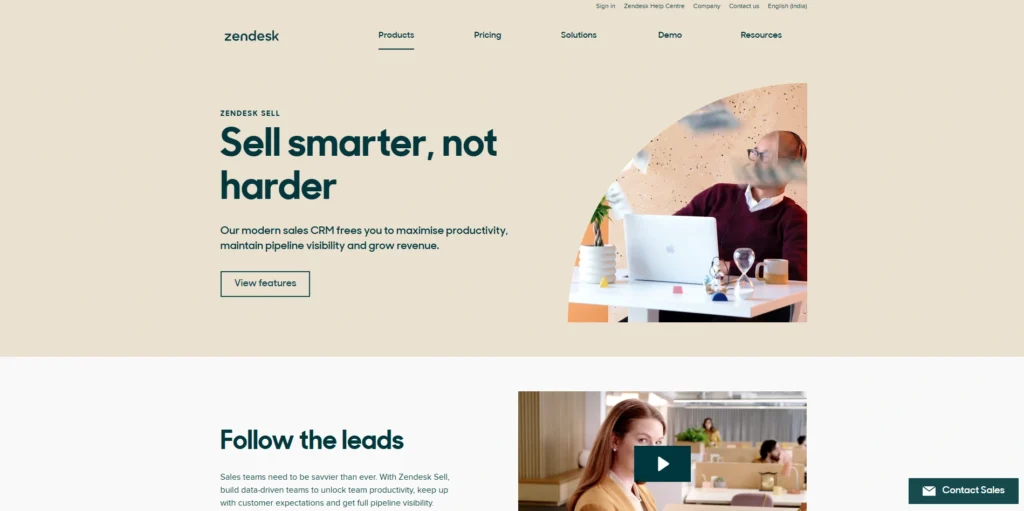
Zendesk Sell is the sales counterpart of the popular Zendesk help system. It assists startups in connecting their sales personnel to customer support personnel. As a CRM Software for Startups, Sell is easy to use with a simple and clean screen, allowing it to be used in the recording of data. It gives you the progress of your sales pipeline, can be used on your phone, and lets you know all the information about each customer. When your startup retains customers over long periods and uses good after-sale services, Zendesk Sell can be a smart addition and can be effectively used, especially when integrated with AI Tools to enhance automation and customer insights.
Key Features:
- Mobile sales app
- Email sentiment analysis
- Sales projections reports.
- Support ticket integration
Pros:
- Great mobile app
- Unites sales and support.
- Easy to learn
Cons:
- Few custom integrations
- Basic marketing automation
Price: $19 per user per month.
9. Keap
Website: keap.com
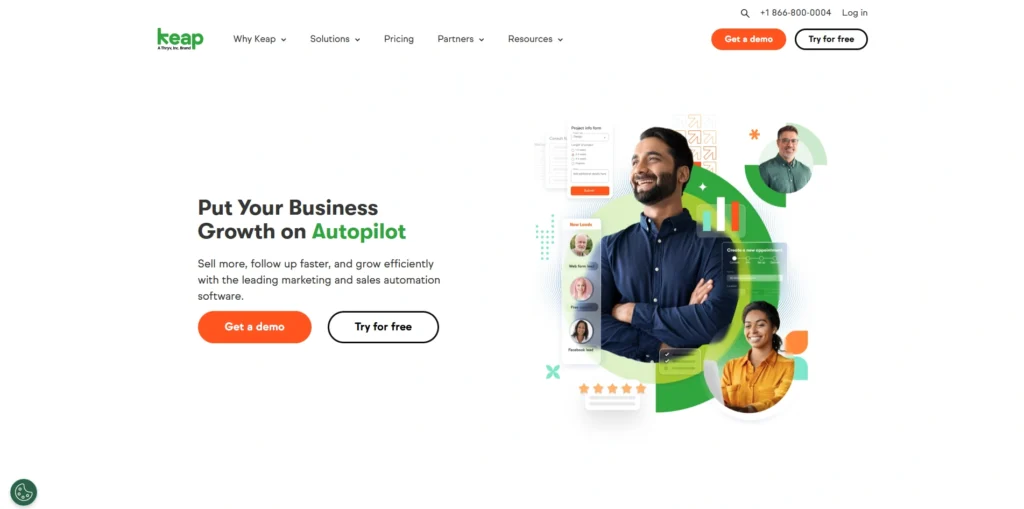
Keap (previously Infusionsoft) combines a CRM and a powerful marketing-automation platform. It is designed to serve small businesses and startups that require operating complex customer journeys. Keap is capable of producing intricate if-this-then-that marketing sequences, managing leads and follow-up mailings, and it can even build invoices. It is a bit more time-consuming to set it up compared to simpler CRMs, but the returns are huge. Startups receive a full-time online sales assistive that operates on leads when founders are asleep.
Key Features:
- More sophisticated marketing automation.
- Drag and Drop campaign designer.
- Built‑in invoicing
- Custom landing pages
Pros:
- Powerful automation
- All‑in‑one marketing
- Strong lead nurturing
Cons:
- Harder to learn
- Higher starting price
Price: $159/month (2 user fee).
10. Insightly
Website: insightly.com
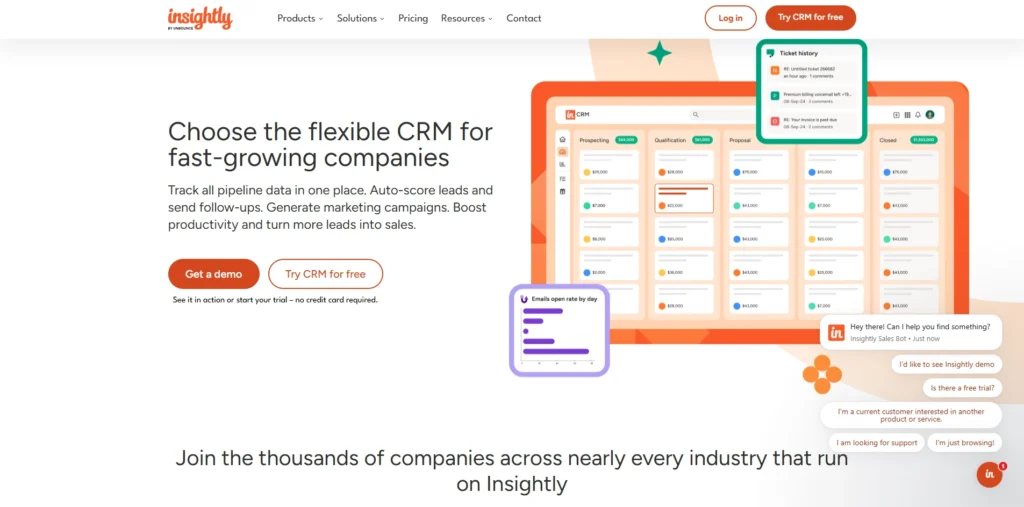
Insightly is a customer relationship management software with project-management functionality. In the case of start-ups when the work is being done in agencies, consulting, or creating custom software this combination proves quite helpful. As a deal is won in Insightly, it automatically transforms into a project to enable your team to view milestones, tasks, and what should be delivered without transferring to a different program.
This CRM Software for Startups also helps teams manage client relationships while keeping projects organized in one place. It is also able to help you design your own tools within its program. Insightly will be a good partner in case your startup intends to track a customer through initial pitch to eventual delivery.
Key Features:
- Project tracking after sale
- Custom app builder
- Strong workflow automation
- Milestone tools
Pros:
- Good https://www.coursera.org/articles/what-is-milestoneproject management
- Smooth handoff after sale
- Records are very customizable.
Cons:
- Clunky interface
- Slow support
Price: $29 per month.
11. Copper
Website: copper.com
Copper is a customer relationship management tool designed specifically to work with Google Workspace. It works in your Gmail inbox, hence you need not learn a new program or tab switch. Copper has capabilities of grabbing signatures, capturing emails, or generating contacts, and you barely have to type anything. It resembles Google apps in appearance, and thus users begin using it immediately. Copper is the most seamless CRM you can have when your startup primarily uses Gmail, Calendar, and Drive.
Key Features:
- Works inside Google
- Auto saves information
- Shows in Gmail sidebar
- Shows sales stages
Pros:
- Stays inside Gmail
- No learning needed
- Automatically records data
Cons:
- Needs Google Workspace
- Not many other integrations
Price: $29/month
12. Nimble
Website: nimble.com
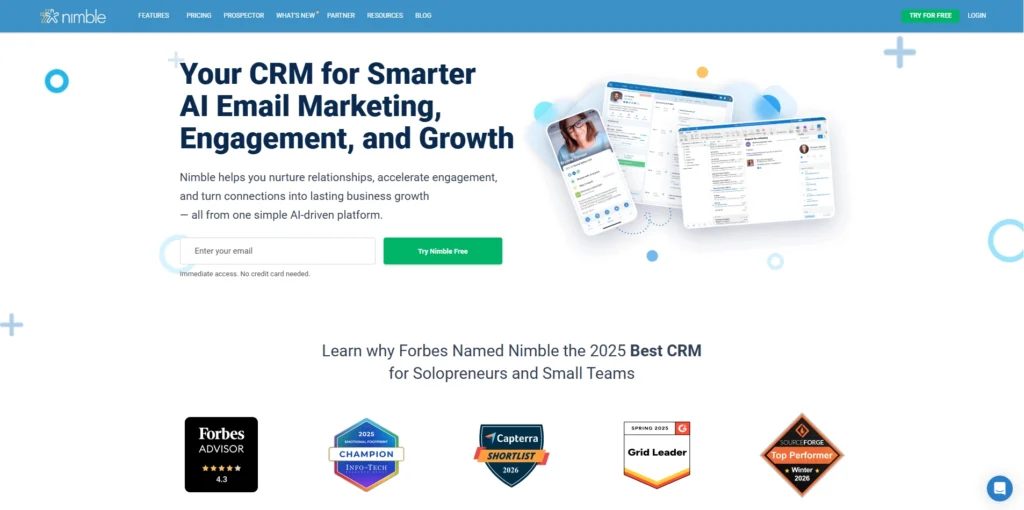
Nimble is a CRM that is geared towards social networks, and is popular with startups that network and sell via social media. It constructs detailed contact profiles by extracting information based on LinkedIn and Twitter among other internet sources. The Nimble browser extension enables you to add leads and update records on any web page. It has the appearance of a smart contact book and it reminds you that you need to connect. Nimble is effective when your business has the goal of building relationships.
Key Features:
- Social profile enrichment
- Smart browser extension
- Unified communication inbox
- Daily relationship reminders
Pros:
- Incredible social insights
- Great browser extension
- Very affordable pricing
Cons:
- Basic sales pipelines
- Outdated interface design
Price: $24.90/month.
13. Capsule
Website: capsulecrm.com
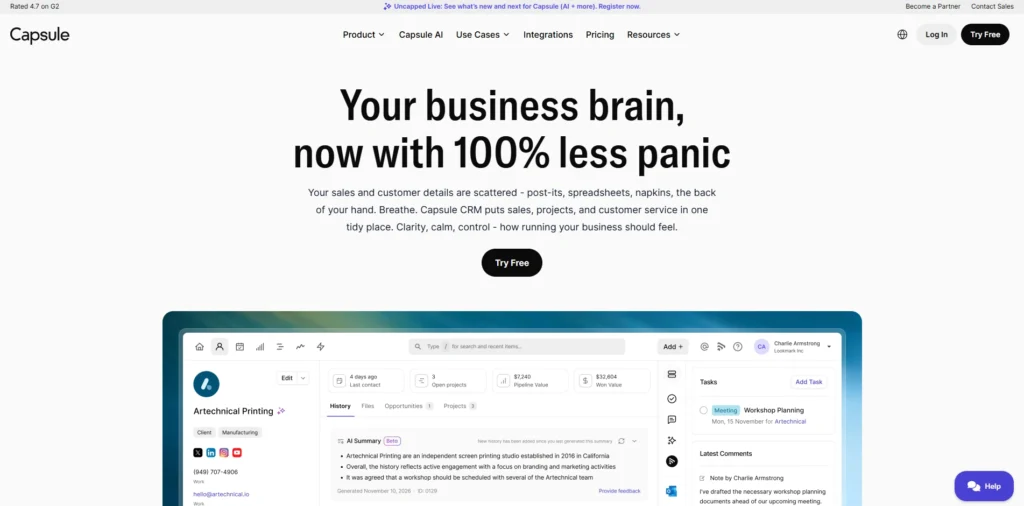
Capsule CRM is appreciated because of simplicity and cleanliness. It eliminates bulky business software away, hence it provides only what a small business requires: managing contacts, simple selling phases, and task monitoring. It is very fast to set up and is compatible with Xero, QuickBooks and Mailchimp. Capsule is simple in its approach and does that well. Capsule can be a good option should you desire a clean, dependable and inexpensive digital address book.
Key Features:
- Simple sales stages
- Easy task list
- Sales milestones
- Simple email link
Pros:
- Very simple interface
- Quick setup
- Low cost for starters
Cons
- Few automation options
- Basic reports
Price: $18/month
14. Agile CRM
Website: agilecrm.com
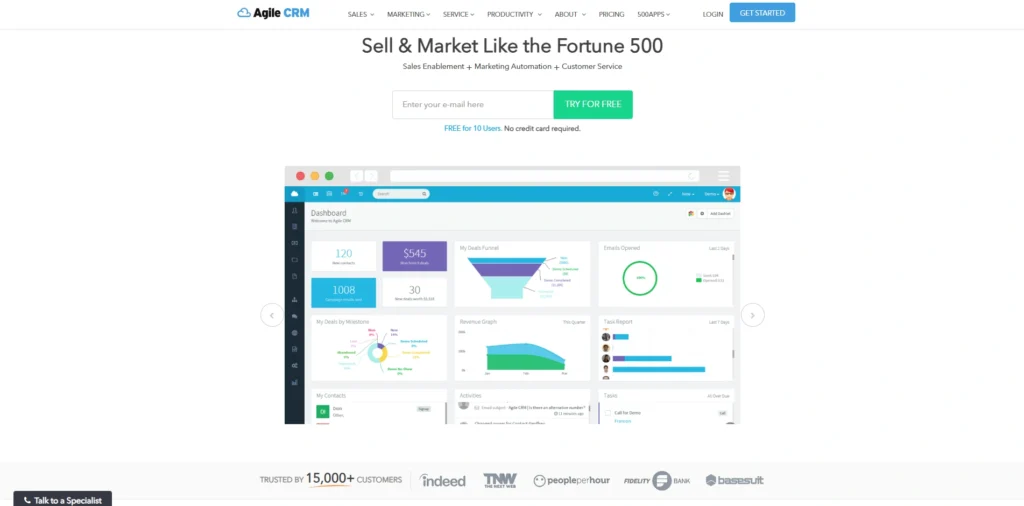
Agile CRM is an easy-to-use, one-size-fits-all software allowing small businesses to utilize sales, marketing, and customer service software in a single low-priced platform. It provides features typically accessed by large businesses such as fast pop-ups on websites and intelligent social listening. It appeals to startups since they are able to send email campaigns, manage help tickets and monitor sales progress without purchasing 3 different programs. There are lots of features and it might seem a lot sometimes but it is still worth the money.
Key Features:
- Marketing automation builder
- Telephony and auto‑dialer
- Helpdesk ticketing system
- Web tracking analytics
Pros:
- Many useful features
- Very affordable
- One platform for everything
Cons:
- Interface can be slow
- Hard to learn at first
Price: $8.99/month
15. ActiveCampaign
Website: activecampaign.com
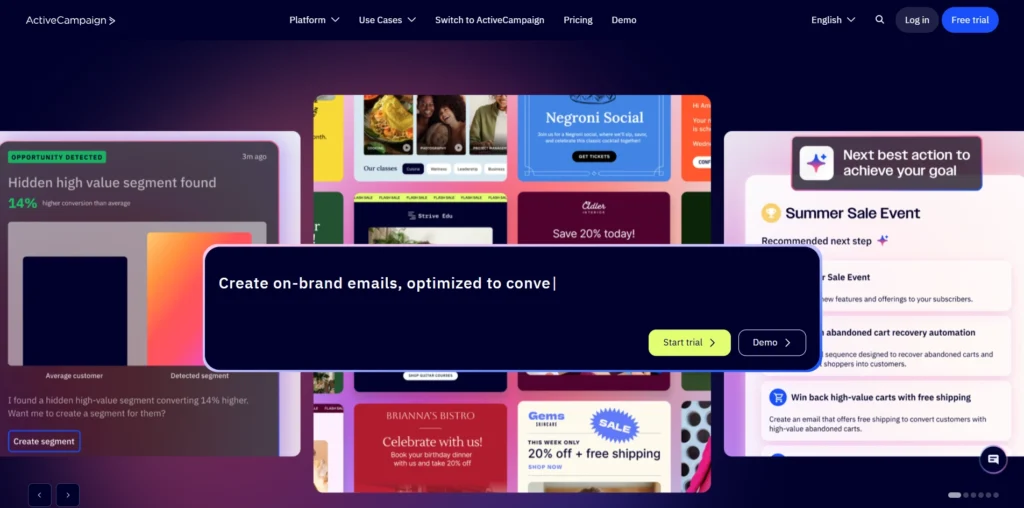
ActiveCampaign strives to make the experience in the customer’s mind flawless by combining email marketing with an online customer relationship management system (CRM) and intelligent learning. It works very well with e-commerce or software startups which require sending smart and automated messages when the user performs actions. The CRM component automatically advances deals by receiving traffic when a visitor visits the site or receives emails. It has a visual automation builder, which is among the best. When your startup requires less old fashion cold calling and more customized, automatic email routes, ActiveCampaign offers targeting and communication power that cannot be defeated.
Key Features:
- Advanced email marketing
- Site tracking analytics
- Visual automation builder
- Dynamic lead scoring
Pros:
- Excellent marketing automation.
- Highly individual outreach.
- Lots of integration options
Cons:
- CRM is not the main focus
- Prices get high
Price: $15/month (basic), $49/month full CRM
How to Choose the Right CRM for Startups
Selecting an appropriate CRM out of an overcrowded market might be difficult. In order to choose the most suitable one, align the needs of your startup with these four fundamentals:
- Finance and expenditure of the future: Go beyond free plans. Consider the amount of additional cost you will incur due to changes in premium features and new users as you expand.
- Ease of use: A CRM can remain useless if it is not used by anyone. Hard interfaces should be avoided and always use trial versions in order to check whether your team likes it.
- Key integrations: ensure that the CRM integrates with tools you are already using, such as Gmail, Slack or your accounting software.
- Growth capacity: Select one that is not overly heavy today, but yet capable of bearing your development in the next five years
Conclusion
It does not necessarily need to be complicated to find the most appropriate CRM Software for Startups. This guide introduced the fundamental term of CRM software, discussed the crucial value that it adds to expanding organizations, and listed the top 15 existing CRM systems. We also provided you with some essential strategies for reducing options based on budget, usability, and scalability.
Your choice of CRM, whether it is the no-cost simplicity of HubSpot, the visual pipelines of Pipedrive, or the automation of Keap, can significantly enhance your efficiency and revenue potential when adopted early. Do not let your valuable leads slip away—invest in a powerful startup CRM solution today and watch your business grow.
FAQs
1. Should A CRM Be Used In a Startup With Just 2 or 3 Employees?
Yes. Early adoption of a CRM is a habit that is important in data building and maintenance of customer data in a single destination, ensuring sales processes remain uninterrupted in terms of volume or recruitment.
2. How Is an Enterprise CRM And a Startup CRM Different?
Enterprise CRM is complicated, costly and designed to serve thousands of users. Startup CRMs are aimed at plug-and-play features, low costs, and pre-built integrations of small and agile teams.
3. Is CRM Applicable In Marketing, As Well As Sales?
Absolutely. All-in-one applications such as HubSpot, ActiveCampaign, and Keap allow managing email messaging, web traffic, and finalizing sales with just one dashboard.
4. What Is The Duration Of CRM Implementation?
Majority of startup oriented CRMs (such as Pipedrive or Copper) require between a few hours up to few days to be established. Platforms that are highly customized (such as Salesforce Starter) can require a month or two to optimize.