
High quality content is not sufficient to attain good visibility in search engines. Thousands of articles are published every minute, and to make their content more prominent, businesses and creators need to make sure that their content is optimized. Keywords relevance, search intent, semantic depth and content structure are all factors that make a page better or worse in search results. Even a well-written content might not find the target audience without proper optimization.
The solution to this issue is Content Optimization Tools that feed writers and marketers with data that can be used to enhance their content to make it better for search engines and readers alike. They are platforms that examine the leading pages, recognize key keywords and topics, and provide real-time recommendations to improve readability, structure, and search engine optimization. Most of the tools come with AI-based options that help with content planning, competitor analysis, and performance tracking.
In this blog we discuss the 15 best content optimization software in this guide to assist marketers, bloggers and organizations to create content that becomes higher and better ranked in the online world.
Why Content Optimization Tools Are Essential For SEO Success
- Improved Search Engine Presence: Such tools are useful in streamlining the placement of keywords, content, and topical relevance such that your content is compatible with ranking signals applied by the search engines. This will enhance your likelihood of ranking higher in search engine pages (SERP).
- Smarter Keyword Targeting: They are the main and the minor keywords and they are used in a balanced manner throughout the content. This is to ensure that the keywords are placed naturally and not over-optimized.
- Stronger Content Relevance: These tools analyze competitor pages and search intent data so your content does not remain incomplete, covering the questions raised by users and meeting audience expectations. Many marketers also combine these strategies with advanced AI SEO Tools to improve content research and optimization more effectively.
- Growth in Topical Authority: Most of them facilitate topic clustering and internal linking techniques which enhance authority within a particular niche and enhance ranking in related keywords.
- Higher Organic Traffic: Streamlined content has the effect of attracting targeted traffic of search engines, which assists businesses to expand their traffic without necessarily overrelying on paid advertising content.
- Improved User Experience: Reformatting, readability, and structure are some suggestions that help to simplify content and thus make it easier to consume, thus boosting dwell time and reducing bouncing rates.
- Information-Based Content Strategy: The content optimization platforms offer actionable information based on competitor research, analytics, and scoring tools to make informed decisions.
- Production of Scalable Content: Simplified research, draft, and optimization features of automation allow teams to write at scale and maintain the quality of the content produced by the automation.
Benefits Of Content Optimization Tools
- Better Search Positioning: Enhances on-page optimization factors in order to enhance appearance on the search engine results.
- Improved Keyword Usage: Assistance in the placement of key and secondary keywords in the content in a natural manner.
- Better quality of content: Gives recommendations to readability, structure and clarity.
- Greater Search Intensive: Assures that what is being found in the content is what is being searched by the users.
- Competitor Insights: Compares the Pages with the top positions to determine the content gaps and opportunity.
- Increased Research, Structure and Optimization Recommendations: automation of research, outlines and optimization recommendations.
- Increased User Interaction: Better formatting and readability increase user interaction.
- Scalable Content Strategy: Permits organizations to make vast amounts of content that is friendly to the search engines.
How Content Optimization Tools Improve Search Rankings
- Placing Keywords Strategically: These tools suggest the positions of the primary and secondary keywords to include so that search engines can better understand the relevance of your page topic. While Content Optimization Tools improve structure and on-page SEO, many marketers also rely on keyword research tools to discover valuable search terms before optimizing their content.
- Search Intent Alignment: Through analysis of SERP data, optimization tools make sure that the content is in line with the user intent of informational, transactional, or navigational.
- Competitor Gap Identification: They point out missing keywords or areas on the rival pages allowing you to develop more detailed and competitive content.
- Improved Content Structure: Optimization software recommends superior administrative hierarchies and styles, which ensure that it is simpler to search and interpret the data by search engines.
- Semantic SEO Enhancements: Most of the tools suggest related entities and NLP-based keywords that reinforce topical depth and context.
- Readability Improvements: These tools enhance readability and make sentences easier to read and understand by simplifying the structure of the sentence, the tone, and the formatting, indirectly affecting the rankings.
- On-Page SEO Improvements: They also help in the optimization of meta tags, schema markup and inner links which reinforce the overall performance of a page in terms of SEO.
- Constant Performance Checking: Monitoring the ranking of the key words and the marketer rating of the optimization enables the marketer to optimize the content periodically and ensure high visibility in search.
How to Choose the Right Content Optimization Tool
Below are the major considerations to make when selecting the most appropriate solution.
1. Identify Your Content Goals
The first step is knowing what you wish to accomplish by the tool. There are content research and planning platforms, and there are platforms that are on-page optimization-based or with artificial intelligence-assisted writing. Indicatively, when you want to maintain or boost the ranking of the existing blogs, then the tools that have a good SERP analysis and use of keywords will be of more value.
2. Assess Google SEO and Artificial Intelligence.
The latest content optimization software tends to include both AI assisted writing and SEO advice. Find such options as semantic key word hints, natural language processing, content rating, and competition information to make sure that your content is in line with the search engines.
3. Check Integration Options
Select an instrument that fits into your current working process. Sites compatible with Google Docs, WordPress, or other CMS platforms enable authors to do content optimization without having to open different apps.
4. Consider Ease of Use
A complicated dashboard may reduce productivity. When you have beginner or non-technical writers in your team, it is better to choose an interface that is easy to use, has suggestions that are guided, and scoring systems that are simple to understand.
5. Examine Scalability and Pricing.
Prices of different optimization tools differ greatly. Others have low-cost solutions aimed at freelancers and small businesses, whereas others are enterprise teams. Think about whether the tool can grow with your requirements of producing content as your site increases.
6. Search Competitor and SERP Insights.
The page ranking tools, the gaps in keywords and their structure can give great information on how to beat off the competition. This is a good feature that assists in making sure that your content includes all the necessary topics and fulfills search intent.
List of 10 Best Content Optimization Tools
1. Frase
Website: https://www.frase.io/
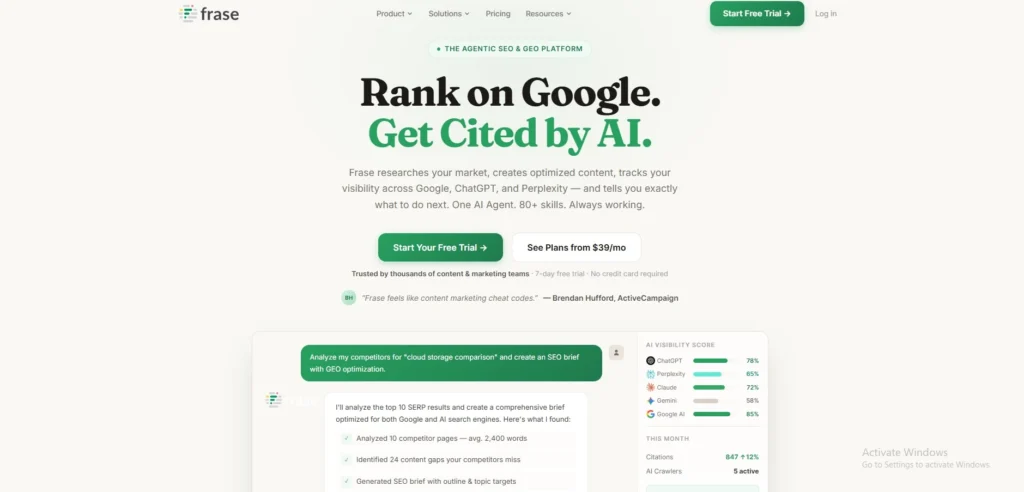
It is well known that Frase allows simplifying content research and optimization in the initial phases of the writing process. The platform breaks down the leading pages on a specific keyword and automatically produces structured content briefs that are indicative of search intent and competitor coverage.
One of the best features offered by Frase among modern Content Optimization Tools is its ability to extract frequently searched questions from user queries. This allows writers to create content that directly matches what searchers are looking for. As a result, articles become more comprehensive and better aligned with the way people search on the internet.
Frase also provides real-time optimization score and keyword hints as one writes enabling creators to optimize their drafts in real-time. Frase is especially helpful to bloggers, freelancers, and marketing teams that wish to produce in-depth content that aligns with the search engine and is created at a quicker rate.
Key Features
- SERP-driven content briefs
- AI outline generation
- Question research tools
- Scoring real-time optimization.
- Answer-focused recommendations
- Content analytics
Pros
- Good as far as search intent is concerned.
- Saves a lot of time in research.
- User-friendly and easy interface.
- FAQ extraction features Useful features
- Affordable pricing options
Cons
- Limited competitor metrics
- AI drafts require editing
- Less integrations than competitors.
Pricing
- Starter: $49/month
- Professional: $129/month
- Scale: $299/month
2. SEMrush SEO Writing Assistant
Website: https://www.semrush.com/
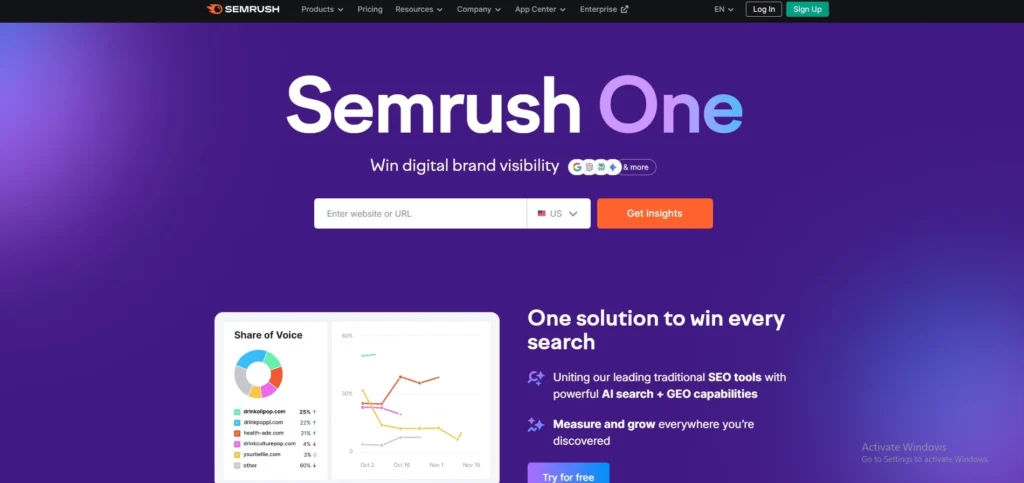
SEMrush SEO Writing Assistant is one of the useful Content Optimization Tools designed to improve SEO while writing. It can be used with Google Docs, WordPress, or directly within the SEMrush platform, providing real-time recommendations to improve readability, keyword usage, tone, and originality.
Since it is a component of the bigger SEMrush ecosystem, access to a wealth of data on key research, competitors, and traffic analytics are also available to the users. This enables marketers to integrate content optimization and larger-scale SEO efforts.
Content is rated using a scoring system in which aspects that need improvement such as levels of readability and the distribution of keywords are highlighted by the tool. Combined with the total SEO kit of SEMrush, it turns out to be an effective solution to marketers who require both the help with the writing process and the monitoring of the performance.
Key Features
- SEO Writing Assistant editor.
- Analysis of readability and tonality.
- Built-in plagiarism checker
- Optimization of key words scoring.
- Google Docs/Wordpress integration.
- SEMrush access to key data.
Pros
- As a part of an extensive SEO package.
- Reliable keyword insights
- Online optimization feedback.
- Detecting plagiarism was included.
- Trusted industry platform
Cons
- Needs SEMrush subscription.
- Interface may feel complex
- Limited AI writing features
Pricing
- Pro: $139.95/month
- Guru: $249.95/month
- Business: $499.95/month
3. Yoast SEO
Website: https://yoast.com/
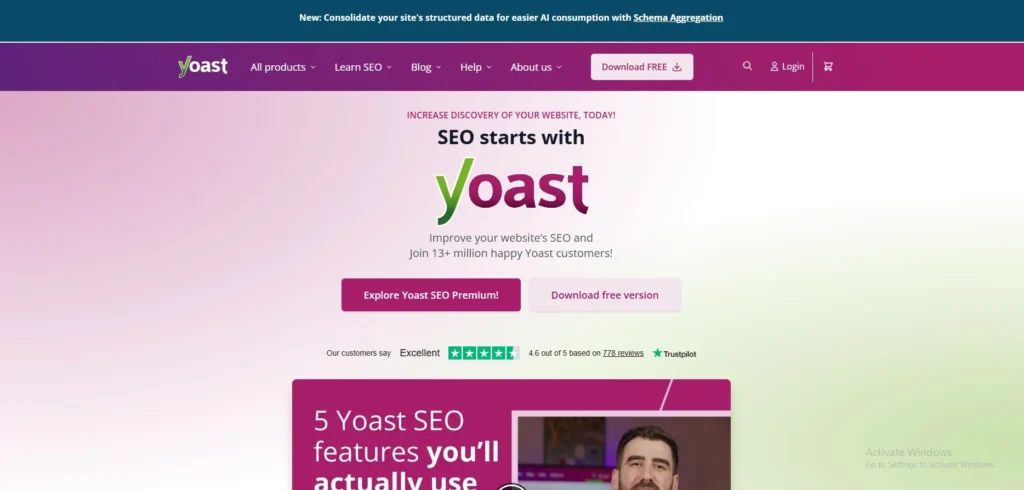
Yoast SEO is among the most popular on-page SEO optimization WordPress plug-ins. It assists users to enhance content readability, positioning of key words, metadata, and structured data that are directly used in the WordPress editor.
The extension is one of the helpful Content Optimization Tools that provides real-time recommendations during the writing process, highlighting factors such as sentence length, passive voice usage, and keyword placement. With these guidelines, it becomes easier to make pages SEO-friendly without needing advanced technical skills, making content optimization a simple and efficient task.
Besides content analysis, Yoast also offers such tools as the XML sitemap generation and schema markup implementation and the internal linking suggestions. Its usability and dependability have contributed to its widespread appeal among bloggers, companies, and website warriors in need of keeping their SEO principles afloat.
Key Features
- On-page SEO analysis
- Readability checker
- Schema markup integration
- Meta tag optimization
- Due to internal linking recommendations.
- XML sitemap generation
Pros
- Very beginner-friendly
- level of WordPress compatibility.
- Reliable SEO basics
- Frequent updates
- Large community support
Cons
- Primary works in WordPress.
- Simple and sophisticated tools.
- Premium features have to be upgraded.
Pricing
- Yoast SEO Premium: $9.90/month
4. Rank Math
Website: https://rankmath.com/
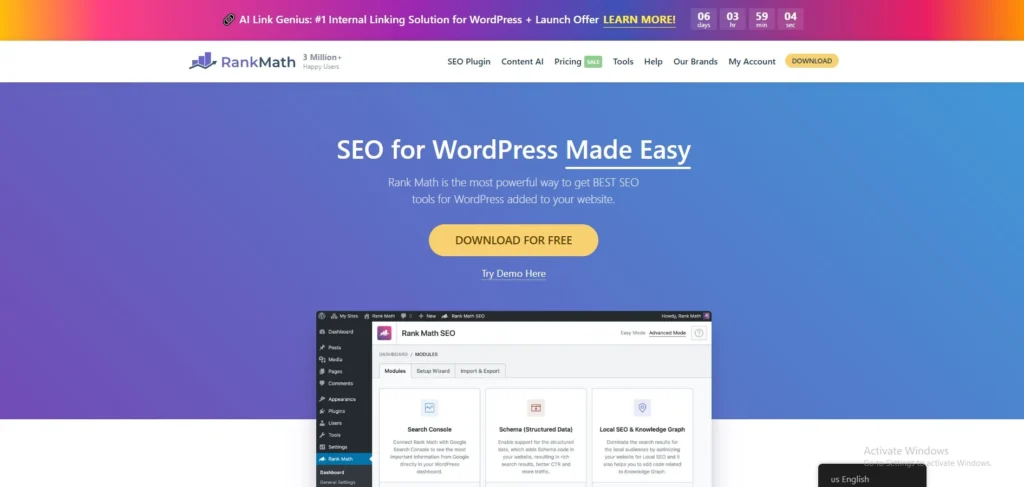
Another significant SEO tool is Rank Math and is used by people who operate WordPress. It is a tool which offers more sophisticated optimization systems, to enhance on-page optimization, the use of keywords and the performance of a site without having to install various external modules.
The tool contains such features as schema markup, scorecard, ranking, and internal linkage recommendations. Rank Math also will be connected with analytics tools to show performance metrics in the dashboard.
The automation features of it streamline operations like optimization of images, management of meta tags, and search engine optimizations. Due to its flexibility and power of a free plan, Rank Math is popular among bloggers, agencies, and businesses operating several websites.
Key Features
- Advanced schema generator
- Artificial intelligent recommendations.
- Multi-keyword optimization
- Rank tracking integration
- Automated SEO audits
- Connection with Google Analytics.
Pros
- Powerful free version
- Very personalized environments.
- Portable and high-speed performance.
- Built-in analytics features
- Competitive pricing
Cons
- Novices may be too baffled by many features.
- Infrequent conflicts with the plugins.
- Needs SEO skills to realize its full potential.
Pricing
- Pro: $7.99/month
- Business: $24.99/month
- Agency: $54.99/month
5. NeuronWriter
Website: https://neuronwriter.com/
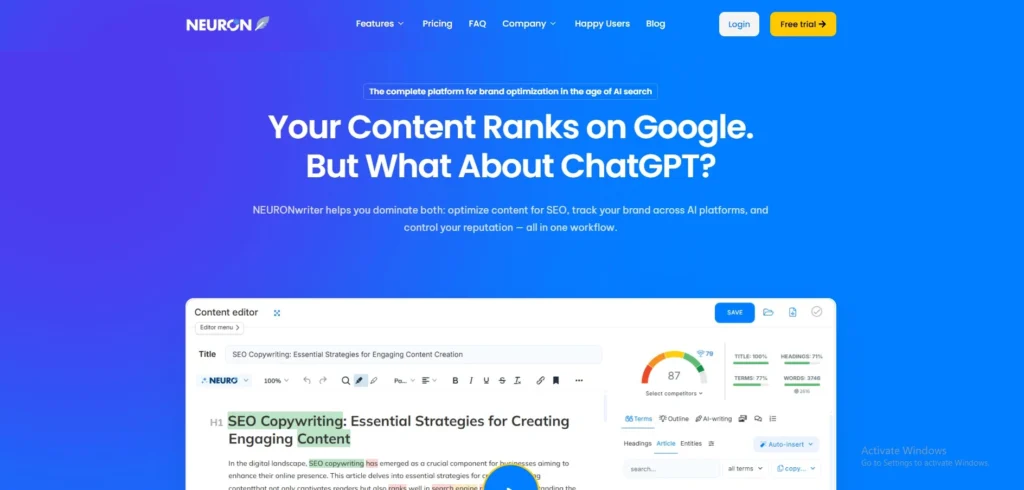
NeuronWriter is a semantic search engine that assists writers in enhancing the relevance of content and alignment of search intent. The tool will analyze your content with the highest-ranked pages and point out keywords, entities, and topics to be added using the NLP analysis.
It offers more in-depth competitor data and suggestions that allow users to increase content coverage to achieve better topical relevancy. The platform also provides multilingual optimization, which is the reason why it can be adapted to international SEO strategies.
The combination of low prices and sophisticated semantic analysis, as well as, allows NeuronWriter to appeal to freelancers, small enterprises, and marketing teams as it grows and requires the power of optimization without enterprise-level costs.
Key Features
- NLP content scoring
- Competitor comparison tools.
- Suggestions on semantic keywords.
- Multilingual SEO support
- Content planning features
- SERP analysis reports
Pros
- Affordable plans
- Competent semantic optimization.
- The competitor insights are beneficial.
- Clean and easy interface
- International SEO is convenient.
Cons
- Limited integrations
- Interface could improve
- Entry-level writing AI.
Pricing
- Bronze: $23/month
- Silver: $45/month
- Gold: $69/month
- Platinum: $93/month
- Diamond: $117/month
6. Outranking
Website: https://www.outranking.io/
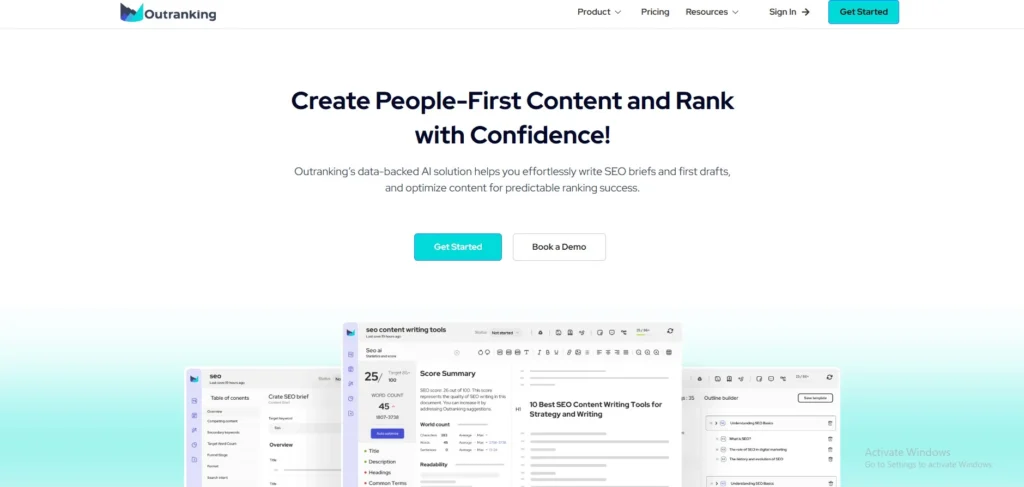
Outranking is an entire platform that integrates content optimization and systematic writing processes. It takes the users through the step-by-step process of creating SEO-friendly contents that should be based on search intent and competitor strategies.
The tool examines the most popular pages and identifies the weaknesses in the use of keywords, coverage of the topics, and organization. It also gives suggestions on internal connectivity, featured snippet enhancement and content enhancement.
The workflow management capabilities of Outrank specifically make it popular among groups of people who work on content creation and would like to see the progress of research to end optimization.
Key Features
- AI-powered content briefs
- SERP data analysis
- Internal links recommendations.
- The optimization of the featured snippet.
- Workflow management tools
- Automated SEO scoring
Pros
- defined workflow of content creation.
- Assistance outline suggestions.
- Encourages team work.
- Strong competitor insights
- Effective snippet optimization programs.
Cons
- Increased levels are costly.
- Requires setup time
- Interface learning curve
Pricing
- Starter: $19/month
- SEO Writer: $79/month
- SEO Wizard: $159/month
7. Scalenut

Website: https://www.scalenut.com/
Scalenut is a content marketing tool that integrates AI writing with the ability to optimize the content using SEO. It enables users to create optimized drafts in a short time using keyword suggestions and structural advice.
It has a well-known Cruise Mode which takes writers through a two-stage approach which involves research, outline development, drafting, and optimization. Scalenut also offers the features of keyword planning, competitor analysis and topic clustering.
Scalenut is popular because of its capacity to handle research, writing and optimization within a single workflow by the agencies and marketing departments that generate vast quantities of content.
Key Feature
- AI Cruise Mode
- Keyword Planner
- Content Optimization
- SERP Analysis
- AI Writing Assistant
Pros
- Combines AI writing and SEO
- Perfect in scaling of content production.
- Competitive pricing plans
- Fast draft generation
- All-in-one workflow platform
Cons
- AI drafts need editing
- Poor developed SEO analytics.
- Some repetitive AI outputs
Pricing
- Starter: $59/month
- Plus: $89/month
- Professional: $199/month
8. Surfer SEO
Website: https://surferseo.com/
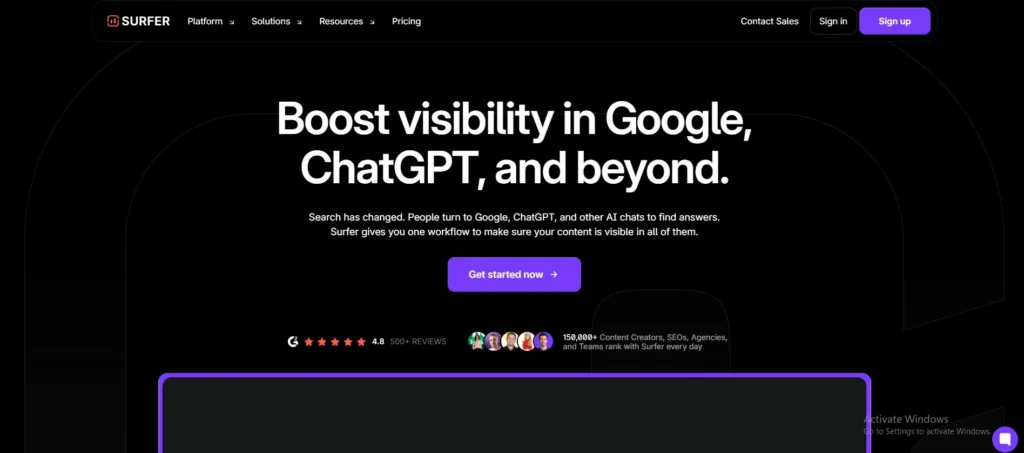
Surfer SEO is an all-encompassing optimization tool, which assists creators to align their content with the highest search positions. The platform also examines hundreds of ranking factors and provides real-time suggestions in terms of the use of keywords, structure and semantic relevance.
The content editor compares your draft with the best competitor pages and shows you the missing keywords, optimal content size and structural changes. This assists the authors to perfect their articles prior to publication.
Surfer can be used with such tools as Google Docs and WordPress and the process of their optimization will be simple with the familiar writing environments. Due to its robust analytics and competitor intelligence, it can be used by many SEO specialists, agencies, and marketers intending to enhance on-page performance and gain search visibility.
Key Features
- Real-time SEO content editor
- NLP key word suggestions.
- SERP competitor analysis
- That is why the content planner is a topic cluster.
- The incorporation of WordPress and Google Docs.
- AI-generated outlines
Pros
- Accurate SEO suggestions
- Strong competitor insights
- Easy compatibility with writing tools.
- Guideline on useful content structure.
- Scalable for agencies
Cons
- Higher cost for beginners
- Complex tools are acquired through learning.
- The potential of the overuse of key words when improperly used.
Pricing
- Standard: $119/month
- Pro: $219/month
- Peace of Mind: $359/month
9. Clearscope

Website: https://www.clearscope.io/
Clearscope is a high-quality content optimization service that aims at increasing the depth of semantics and topical coverage. It employs high-grade NLP analysis to analyze top-ranked pages and produce recommendations to writers in terms of keywords and topics.
The platform will provide a letter mark, A + to F, in respect to the degree of your content meeting the necessary optimization requirements. This ensures that areas of improvement can be spotted in a very short time.
Clearscope can be used with Google Docs and WordPress so that authors can maximize content using familiar interfaces. The tool is highly utilized by businesses and commercial content strategists who are interested in creating authoritative content due to its clean interface and accurate suggestions.
Key Features
- NLP keyword suggestions
- Content grading system
- Google Docs integration
- Competitor page analysis
- Readability monitoring
- Detailed reports
Pros
- Suggestions on keywords are very precise.
- Clean user interface
- Trustworthy business capabilities.
- Outstanding in authority content.
- Effective reporting practices.
Cons
- Expensive for smaller teams
- Weak keyword research functions.
- Not ideal for tight budgets
Pricing
- Essentials: $129/month
- Business: $399/month
10. MarketMuse
Website: https://www.marketmuse.com/
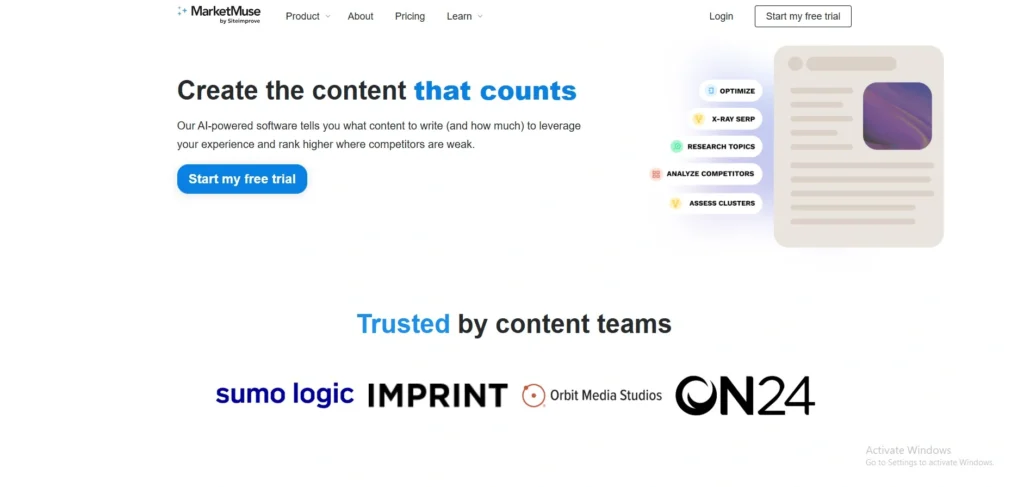
MarketMuse is an AI tool to assist teams in planning and optimization of large scale content strategies. It does not rely on keywords alone, but instead, it relies on advanced topic modeling and content analysis to measure the strengths and weaknesses of your content library.
The platform reveals the gaps in the coverage of topics and suggests new possibilities with content which can enhance authority and search visibility. Many creators also combine such insights with AI tools for content writing to generate ideas faster and produce well-structured content. It also creates detailed content briefs, proposed sub topics as well as internal linking opportunities.
MarketMuse can be applied especially to large editorial teams and enterprise websites, where the long-term SEO plan and content strategy are more important.
Key Features
- AI topic modeling
- Content inventory analysis
- Competitive gap insights
- Automated content briefs
- Authority scoring
- Internal linking recommendations.
Pros
- Top strategic thinking.
- Ideal for large websites
- Good topical power analysis.
- Data-driven recommendations
- Powerful planning tools
Cons
- High pricing
- Difficult interface to the beginners.
- Too advanced for small blogs
Pricing
- Contact sales (Custom pricing)
Conclusion
The tools of Content Optimization Tools are crucial to the effective competition of businesses and creators in the modern digital environment based on search. These platforms offer actionable insights on the basis of information like search intent, competitor performance, relevance of the keywords being searched, and semantic analysis as opposed to depending only on intuition. In their process of assisting writers in creating content with real-time suggestions, it becomes easier to produce content that fits current SEO requirements and is valuable for readers.
These tools can help enhance the content strategy in the long-term, in addition to enhancing the quality of individual articles, by helping determine gaps in topics, build topical authority, and ease the research and writing process. Content optimization platforms are used to scale production without compromising quality whether by the bloggers, agencies, or enterprise teams. When used strategically, they may increase the visibility of searches, bring in qualified organic traffic, and make online presence growth a constant.
FAQs
1. What Is A Content Optimization Tool?
A content optimization tool is software that analyzes and improves website content to increase its chances of ranking higher in search engines and engaging readers effectively.
2. Do Content Optimization software Guarantee Higher Rankings?
No tool can guarantee rankings, but they improve the likelihood of better performance by aligning content with SEO best practices and search intent.
3. Are Content Optimization software Suitable For Beginners?
Yes, many tools offer beginner-friendly dashboards and guided recommendations that help users optimize content even without deep SEO expertise.
4. Can These Tools Replace SEO Professionals?
Content optimization tools support SEO strategies but cannot replace the expertise, creativity, and strategic planning of experienced SEO professionals.
5. How Frequently Should Content Be Optimized?
Content should be reviewed and optimized periodically, especially when rankings decline, search trends change, or competitors update their content.