In the quick-service restaurant (QSR) sector, Subway has forged a niche for itself. The brand is famous for offering healthy food and customizable sandwiches, and it is globally well recognized. In India, Subway has grown consistently since its arrival in 2001 and is now a leading consideration for aspiring businessmen seeking to enter the food and beverage franchise business.
If you’re looking to start a Subway franchise business in India, this guide complete on Subway Franchise Cost in India will walk you through each detail ranging from investment and operational procedure to returns and FAQs. With more than 37,000 stores in over 100 nations, Subway’s franchising business is strong and tried. Let’s explore how you can be a part of this global success story in India.
Why Choose Subway?
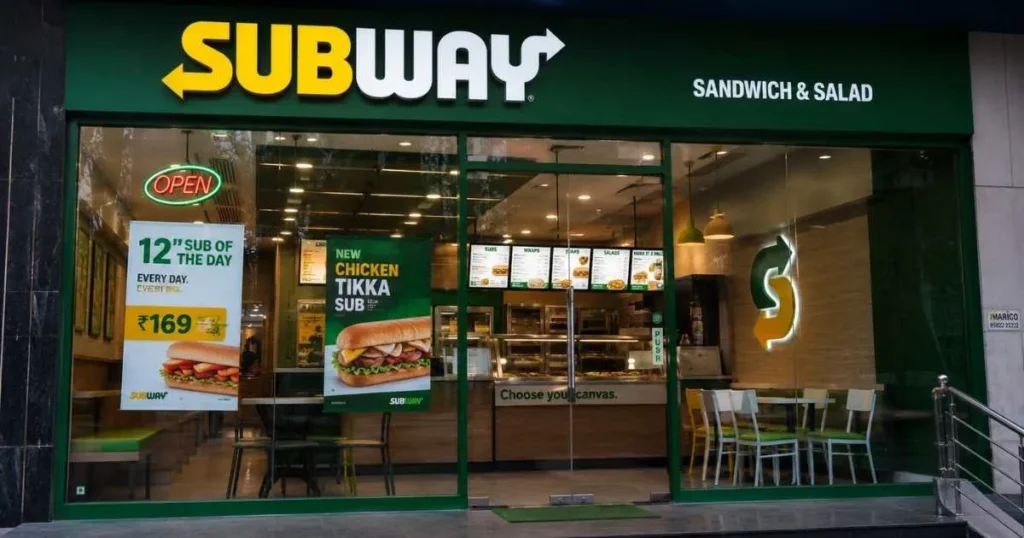
Subway is a global QSR chain brand with a presence of more than 37,000 restaurants across 100+ nations. In India, it operates on a 100% franchise model, with all outlets independently owned—providing equal opportunities to entrepreneurs in both metros and smaller cities. For those seeking a business idea under 5 lakh, exploring compact or kiosk-based models could make entry more accessible, depending on location and setup.
What differentiates Subway is its healthier, customizable menu. While the majority of fast-food chains deal in fried and heavy foods, Subway targets urban, health-savvy consumers with fresh vegetables, lean proteins, and even Jain-friendly meals. This makes it a favorite among college students, working professionals, and families.
Backed by extensive training, supply chain support, and global branding, Subway requires no prior food business experience. Whether you’re a first-time investor or looking to expand your portfolio, Subway offers a scalable, proven model with rising demand in Tier 1 and Tier 2 cities.
Subway Franchise Cost in India
Although Subway is a low-capex alternative for many international brands, opening one still involves a high initial capital outlay. Here’s the estimated capital requirement breakdown:
| Cost Head | Estimated Amount (INR) |
| Franchise Fee | ₹6.5 – ₹7.5 lakhs |
| Store Setup (Interiors + Design) | ₹35 – ₹50 lakhs |
| Equipment & Appliances | ₹8 – ₹10 lakhs |
| Working Capital | ₹5 – ₹8 lakhs |
| Marketing (Initial Local Push) | ₹1.5 – ₹3 lakhs |
| Total Estimated Investment | ₹60 – ₹85 lakhs |
In addition to the initial investment, Subway charges:
- 8% royalty fee on gross sales
- 4.5% marketing fee on gross sales
These fees fund regional and national brand campaigns and operational support.
City-Wise Investment Breakdown: Tier 1 vs Tier 2
Choosing a location for your restaurant means having a flexible budget for each location. Here are the estimated cost ranges associated with opening up a Subway restaurant at different locations across the country:
| City Category | Investment Range | Key Cost Drivers |
| Tier 1 Cities (Delhi, Mumbai, Bengaluru) | ₹75 Lakhs to ₹1.5 Crores | Premium real estate, steep security deposits, and large “Fresh Forward” décor setups. |
| Tier 2 Cities (Pune, Jaipur, Lucknow, etc.) | ₹35 Lakhs to ₹70 Lakhs | Reduced operational setup scale and significantly lower initial rent commitments. |
| Initial Franchise Fee (All Tiers) | ₹6.5 Lakhs to ₹11 Lakhs | Flat upfront fee required to officially secure the brand rights and onboarding. |
| Fit-out & Equipment (All Tiers) | ₹15 Lakhs to ₹70 Lakhs | High-grade counters, refrigeration units, baking ovens, and branded interiors. |
| Working Capital (First 3 Months) | ₹5 Lakhs to ₹12 Lakhs | Operational cushion to cover staff salaries, raw materials, and initial utilities. |
Subway Royalty Fee & Ongoing Costs
Being a global franchisee means keeping in mind continuous payments towards maintaining the global reputation of your brand through royalty. Maintaining brand reputation requires financial outlays which include:
- Basic royalty: Payment of 8% of gross sales every month to the franchise’s parent company.
- Sales tax exclusion: The royalty calculation percentage does not include sales tax.
- Advertising fund: Contribution of 4.5% to 8% towards corporate’s advertising campaign fund.
- Advertising uses: Corporates use these advertising funds to perform extensive national advertisement campaigns to generate local footfall.
- Total brand cost: Cumulative royalty and marketing fees amount to roughly 12.5% to 16% of your revenue.
Step-by-Step Process to Start a Subway Franchise in India
Opening a Subway outlet is a streamlined yet thorough process. Here is how you can go from an inquiry to launch:
1. Apply for the Franchise
Visit the Subway India official website and apply using the franchising inquiry form. You will have to fill in information such as:
- Personal & business details
- Investment capability
- Preferred city/location
- Business background (if any)
2. Read the Franchise Disclosure Document (FDD)
Once shortlisted, Subway will present its Franchise Disclosure Document, which contains:
- Brand expectations
- Legal requirements
- Financial obligations
- Franchise terms
3. Franchisee Evaluation & Interview
Subway representatives will interview you. They’ll evaluate:
- Your business skills
- Financial preparedness
- Commitment to the brand in the long run
- Knowledge of QSR operations (experience not required)
4. Site Selection and Approval
Location is important in Subway’s business. Your selected site will be evaluated according to:
- Footfall potential
- Visibility and accessibility
- Schools, office, or mall proximity
- Parking and square footage
If you don’t have a location, Subway can help find suitable properties.
5. Sign the Franchise Agreement
After approval, you’ll sign a 20-year franchise agreement. The contract can be extended based on performance and adherence.
6. Training Program
You (or your store manager) will have to complete Subway’s required 2-week training program, which will include:
- Food safety and hygiene
- Store operations
- Staff management
- POS and inventory systems
- Customer experience standards
7. Store Setup
Subway will assist you in arranging with authorized vendors for:
- Interiors and branding
- Equipment and kitchen setup
- Digital systems and billing
- Furniture and fixtures
This stage typically takes 8–12 weeks.
8. Grand Opening
Following store inspection and compliance clearing, Subway helps to open the store with a local promotional campaign and brand-driven marketing.
Location Strategy for Maximum Returns :
In India, Subway fares best at high-traffic locations such as:
- Malls and food courts
- Office parks and IT hubs
- College campuses and tutorial centers
- Transit points (airports, metros, highways)
A retail space of 300 to 800 sq. ft. is adequate, based on the format (dine-in or take-away oriented). Small kiosks are also becoming popular, particularly in transit areas.
Expected Returns and Profitability
Although investment is high, the business model is strong. Here’s what to look out for in terms of financial performance:
- Average Monthly Sales: ₹5 – ₹10 lakhs (city-dependent)
- Net Profit Margin: 10% – 20% after all expenses
- Break Even Point: Within 2.5 – 3.5 years
- ROI Post-Breakeven: 30%+ per annum
Multiple-outlet franchisees tend to have higher returns with economies of scale and central management.
Subway Franchise Break-Even Analysis
Determining when your initial investment starts yielding profit alone forms the core of your entire business planning exercise. The financial time frame and revenue projections that you should keep an eye on for the franchise include:
- Break-even time frame: The majority of operators can break even on total investment between a time frame of 3 to 6 years.
- Daily income: Revenue generated is very volume dependent and swings significantly with sales, with daily gross sales falling anywhere from ₹8,000 to ₹60,000.
- Location-based: Common ground realities discussed among operators on various forums such as Quora state that profitability is highly location based, with selection of a low rent, high footfall location being key.
- Rent consideration: One individual operator from Mumbai noted that heavy rentals can make certain premium models difficult, thereby emphasizing importance of careful leasing.
- Profit margins: After operational costs are settled, the owner takes a fixed and sustainable average net profit of 6% to 15%.
Challenges to Be Aware Of
While Subway’s model is sound, potential franchisees need to appreciate potential pitfalls:
- Urban area high rent affects profit margins.
- High staff turnover is typical in QSRs, raising training expenses.
- Risk of location: Even the strongest brands can perform weakly in poorly selected locations.
- Supply chain logistics, particularly in Tier 2 or 3 towns, can compromise freshness and consistency.
All the same, Subway has robust support to help overcome these issues—through vendor collaborations, staff training modules, and business audits.
We are Suggesting to Read :- Burger King Franchise Cost in India
Subway vs Other QSR Franchises in India
Picking the right Quick Service Restaurant (QSR) brand depends not only on budget but also the complexity involved in the kitchen operations. The following comparative analysis outlines the strengths of Subway as compared to other major heavyweights operating in India’s fast-food market.
| Brand | Investment Required | Franchise Fee | Royalty Fee | Average ROI | Brand Popularity |
|---|---|---|---|---|---|
| Subway | ₹60L – ₹85L | ₹6.5L – ₹10L | 8% | Medium (2.5–3.5 yrs) | High |
| McDonald’s | ₹6 Cr – ₹14 Cr | ₹30L+ | 4%–8% | High (Long-term) | Very High |
| Domino’s Pizza | ₹50L – ₹70L | ₹2.5L – ₹5L | 5%–7% | Medium | Very High |
| KFC | ₹1 Cr – ₹2 Cr | ₹10L – ₹20L | 5%–6% | High | Very High |
| Burger King | ₹2 Cr – ₹5 Cr | ₹11L+ | 4%–6% | Medium–High | High |
Legal & Compliance Checklist
To operate legally in India, your Subway outlet must have:
- FSSAI License
- GST Registration
- Shops & Establishment License
- Fire NOC
- Municipal Trade License
- EPF & ESIC registration (if hiring over 20 employees)
Subway or its approved distributors can assist in automating much of this compliance effort.
Staffing & Training Requirements
Managing a successful subway restaurant demands an efficient team with thorough knowledge about the brand’s international menu assembling procedures. To effectively manage a Subway franchise, you will require the following human resources:
- Employee numbers: A standard restaurant requires around 5 to 8 employees.
- Role designation: Will involve the designation of store manager, shift supervisor, and ‘Sandwich Artist’ roles.
- Training: All franchisees and managers are mandated by Subway for comprehensive training before launch.
- Training Center: Training must be completed from authorized centers approved by the brand’s headquarters.
- Training Modules: Curriculum will consist mainly of managing inventory and strict sanitization, along with exact menu item assembly.
Is Subway Franchise Profitable in India?
Certainly, a Subway franchise can make a profit in India; however, the success of such an enterprise will depend largely on the location, flow of people, and the management of costs, similar to trends seen in Dairy and bakery retail segments. The monthly revenue earned by the business varies from ₹5 to 10 lakhs, and the profit margin is about 10-20%. Usually, the break-even point occurs between 2.5 and 3.5 years after opening the franchise. Earnings can increase substantially if the restaurant is located in places with higher foot traffic, such as shopping centers, office spaces, or metro cities.
Conclusion
The Subway business model is a strong one supported by a highly reputed international brand. Though the capital investment varies from ₹60–₹85 lakhs, it has the safety of established systems, thorough training, and constant support. With the QSR industry in India booming and growing consumer demand for healthy fast food options, Subway has every opportunity to capitalize on changing food trends.
Whether you are an experienced investor or an ambitious entrepreneur, a Subway franchise is a doorway into one powerful global network. Success is achieved by the right location, quality and cleanliness, and hands-on control of operations.
If food, service, and scalable business are what motivate you, a Subway franchise could be your ideal first (or next) venture.
FAQs
1. Can I open a Subway in a Tier 2 city?
Yes. Subway is expanding into Tier 2 and Tier 3 cities. However, preference is given to locations with strong footfall such as commercial zones, colleges, or highways.
2. Is prior restaurant experience required?
No. Experience is not mandatory. Subway provides detailed training and operational support even for first-time entrepreneurs.
3. What is the duration of the franchise license?
Subway offers a 20-year license, renewable based on performance and mutual agreement.
4. Can I own multiple Subway stores?
Yes. Many franchisees scale their operations after successfully managing one store. Subway supports multi-unit ownership through cluster development models.
5. What kind of support does Subway provide post-launch?
Support includes:
- Regular audits
- Menu updates
- Marketing guidance
- Operational improvements
- Technology and training refreshers
6. How many staff members are needed to run a store?
Typically, a store requires:
- 1 Store Manager
- 6–10 Sandwich Artists
- 1–2 Cleaners/Helpers
Staff count depends on size and format (kiosk vs full service).
7. How long does it take to open a store after approval?
Once approved, it typically takes 90–120 days to launch, depending on location readiness and setup time.